



 AI
AI








Monday, June 19, 2023 8:53:02 AM
Great article. Funny, when I first read 'toiling the world's oceans, hunting for fun' my mind's eye saw 'trolling' in place of toiling. Works as well, doesn't it?
The Cruise Industry Is On a Course For Climate Disaster
JUNE 13, 2023 8:00 AM EDT
To future archeologists, mega cruise ships might be some of the strangest artifacts of our civilization—these goliaths of mass-engineered delight, armed with dangling water slides and phalanxes of umbrellas. Looking up at one, you might gain the impression that cruise companies are trying to awe their customers into having a nice time. We have built battleships of pleasure, toiling the world’s oceans, hunting for fun.
It probably won’t come as a shock that the whole thing isn’t exactly sustainable. A medium-sized cruise ship spews greenhouse gas emissions equivalent to those of 12,000 cars, while environmentalists accuse big industry players of investing little in decarbonization, and of covering up endless delay tactics in a heavy coat of greenwash. And for years, the industry has been dogged by bad PR from everything from routine dumping of toxic sludge to increasingly organized outrage from communities tired of hordes of tourists getting dumped at their docks.
The big question, though, is whether those customers buying cruise packages to the Bahamas or Alaska particularly care. It’s easy to make the case that they don’t. Despite the industry’s continued investment in new fossil fuel-powered ships, cruise ticket sales are projected to climb back to record 2019 sales levels this year after a hit during the pandemic, according to the latest industry association report.
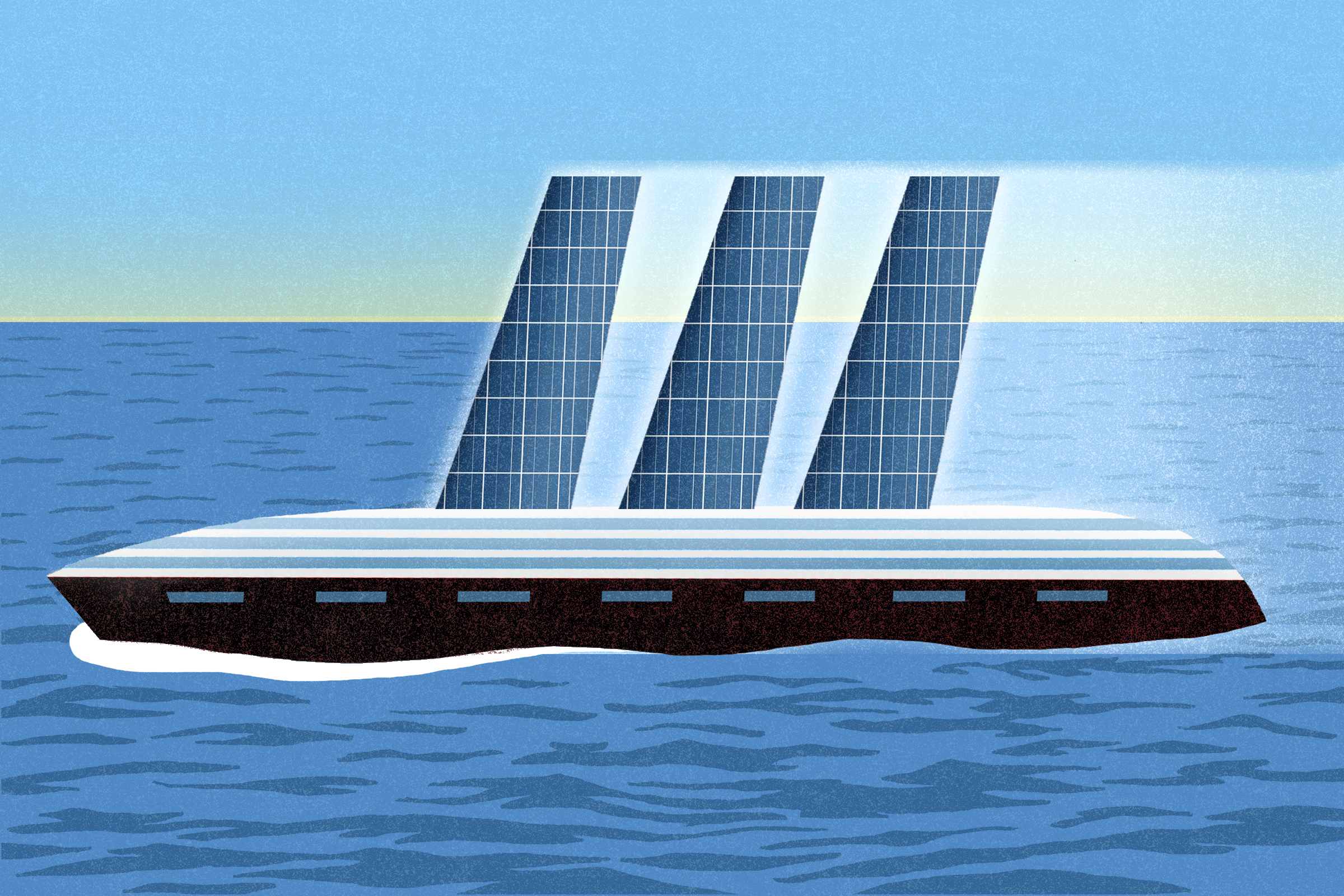
At least one cruise company, though, is betting that at least some potential customers care about sustainable vacations. Hurtigruten, a specialty cruise line based in Norway, says it has built its last fossil fuel-powered ship. On June 7, the company unveiled new details about the technologies it’s testing in pursuit of the world’s first zero-emission cruise ship, and renderings of what the boat might look like. Instead of towering over the ocean, the ship seems to cling close to the water, the better to reduce air resistance. In place of smokestacks, the designers envision retractable sails that double as solar panels. It runs on batteries instead of the thick, sticky fuel oil that powers most ships. And it’ll be ready, the company hopes, by 2030.
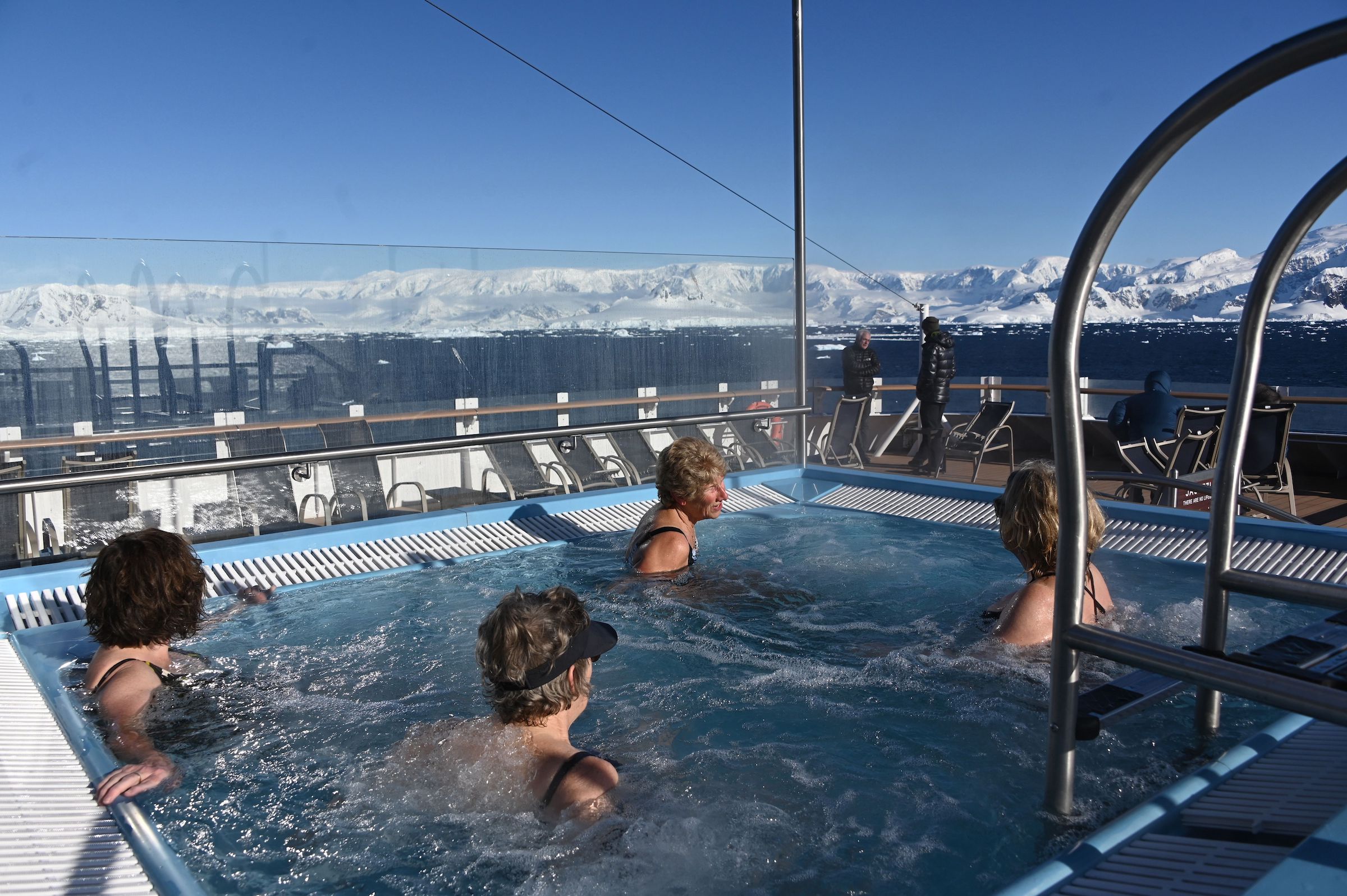
Tourists look at glaciers onboard the Hurtigruten hybrid expedition cruise ship, MS Roald Amundsen, at Chiriguano Bay in South Shetland Islands, Antarctica on November 08, 2019. Johan Ordonez—AFP/Getty Images
What matters to vacationers?
Some climate activists say there’s a good argument that the cruise industry shouldn’t exist at all. Cruise ships are, on the whole, basically inherently wasteful—if you want to see the world, dragging an entire resort around with you is probably not going to be the most efficient way to do it. Compared to flying to a destination and staying in a hotel, cruising almost always has a far higher emissions profile, according to research by Comer and others. A five-night, 1,200 mile cruise results in about 1,100 lbs of CO2 emissions, according to Comer. Flying the same distance and staying in a hotel would emit less than half of that. And that’s not counting for the fact that cruise guests often also have to fly to the port where they will embark.
Bringing that argument to cruise customers, though, can be an uphill battle. The cruise industry puts a lot of money into defending its environmental image. Activists in cities like Seattle, Wash., and Juneau, Ala., often greet disembarking passengers with leaflets on cruising’s environmental effects. But some campaigners say that passengers are often impervious to volunteers’ arguments.
Some passengers, says Karla Hart, an activist with Juneau Cruise Control and co-founder of the Global Cruise Activist Network, will even stop to defend the industry, saying how switching to LNG or phasing out plastic straws has solved cruising’s environmental problem. It’s a symptom, in her view, of a broader dynamic between the cruise industry and its passengers: that customers want to believe they can have the perfect vacations advertised on television and online, even though they know the reality of what they will get is far different.
“It’s a suspension of reality, to go with one’s desire for an experience that you must know you can’t have,” Hart says. “The same as suspending your rational thinking that because they’re not using plastic straws, and they switch to LED lights, that they’re not completely polluting the environment.”
A new TIME survey conducted by The Harris Poll backs up some of those points. To environmental campaigners, cruising stands out as perhaps the most polluting sort of vacation. But fully half of Americans surveyed consider taking a cruise to be “eco-friendly,” with only one in three regarding such vacations as being bad for the environment.
Trying to convince vacationers to make greener choices probably has limited effectiveness anyway. Many Americans consider cruising to be an affordable vacation option—mega cruises especially tend to benefit from economies of scale. Three out of five Americans surveyed by Harris Poll consider cost to be a very important factor in their vacation planning. Meanwhile, only one in five Americans think of the environmental impacts of their vacation in the same way.
Ujwal Arkalgud, who studies consumer decision-making at Lux Research, says that a specialty cruise provider like Hurtigruten might be able to attract customers genuinely interested in sustainability, but that the mass market customers will likely only ever be interested in having a kind of green alibi. “People are not buying to save the planet,” says Arkalgud. “Because you know, one simple way to save the planet would be to not go on the cruise.”
Absent a real push from customers, activists and environmental experts say that only regulation on the level of the IMO, or across enough big ports or markets like the U.S. or the E.U., can make the industry invest in decarbonization in a serious way. “The reason why you’re not seeing a lot of investment and innovation in zero-emission vessels is because it’s a competitive global industry,” says Comer. “If you do something that costs you more, and you’re still competing on price, and you can’t demonstrate to the passenger why they ought to pay more for this, there’s not really any incentive for you to do it.”
Skjeldam supports more regulation—to a certain extent, he says, such measures to limit cruise industry pollution are inevitable. But he also has more faith that cruise-goers actually care about the environment than either activists or other cruise executives. And as the effects of climate change become more pronounced, he says, more of the world’s cruise-buying masses will begin to see the light.
“Unfortunately, there is a misconception in part of the industry, where they don’t think that their guests really are focusing on this. I think that is wrong—I think the guests will focus heavily on it in the future,” Skjeldam says. “The public demands are coming.”
The Cruise Industry Is On a Course For Climate Disaster
JUNE 13, 2023 8:00 AM EDT
To future archeologists, mega cruise ships might be some of the strangest artifacts of our civilization—these goliaths of mass-engineered delight, armed with dangling water slides and phalanxes of umbrellas. Looking up at one, you might gain the impression that cruise companies are trying to awe their customers into having a nice time. We have built battleships of pleasure, toiling the world’s oceans, hunting for fun.
It probably won’t come as a shock that the whole thing isn’t exactly sustainable. A medium-sized cruise ship spews greenhouse gas emissions equivalent to those of 12,000 cars, while environmentalists accuse big industry players of investing little in decarbonization, and of covering up endless delay tactics in a heavy coat of greenwash. And for years, the industry has been dogged by bad PR from everything from routine dumping of toxic sludge to increasingly organized outrage from communities tired of hordes of tourists getting dumped at their docks.
The big question, though, is whether those customers buying cruise packages to the Bahamas or Alaska particularly care. It’s easy to make the case that they don’t. Despite the industry’s continued investment in new fossil fuel-powered ships, cruise ticket sales are projected to climb back to record 2019 sales levels this year after a hit during the pandemic, according to the latest industry association report.
At least one cruise company, though, is betting that at least some potential customers care about sustainable vacations. Hurtigruten, a specialty cruise line based in Norway, says it has built its last fossil fuel-powered ship. On June 7, the company unveiled new details about the technologies it’s testing in pursuit of the world’s first zero-emission cruise ship, and renderings of what the boat might look like. Instead of towering over the ocean, the ship seems to cling close to the water, the better to reduce air resistance. In place of smokestacks, the designers envision retractable sails that double as solar panels. It runs on batteries instead of the thick, sticky fuel oil that powers most ships. And it’ll be ready, the company hopes, by 2030.
Tourists look at glaciers onboard the Hurtigruten hybrid expedition cruise ship, MS Roald Amundsen, at Chiriguano Bay in South Shetland Islands, Antarctica on November 08, 2019. Johan Ordonez—AFP/Getty Images
What matters to vacationers?
Some climate activists say there’s a good argument that the cruise industry shouldn’t exist at all. Cruise ships are, on the whole, basically inherently wasteful—if you want to see the world, dragging an entire resort around with you is probably not going to be the most efficient way to do it. Compared to flying to a destination and staying in a hotel, cruising almost always has a far higher emissions profile, according to research by Comer and others. A five-night, 1,200 mile cruise results in about 1,100 lbs of CO2 emissions, according to Comer. Flying the same distance and staying in a hotel would emit less than half of that. And that’s not counting for the fact that cruise guests often also have to fly to the port where they will embark.
Bringing that argument to cruise customers, though, can be an uphill battle. The cruise industry puts a lot of money into defending its environmental image. Activists in cities like Seattle, Wash., and Juneau, Ala., often greet disembarking passengers with leaflets on cruising’s environmental effects. But some campaigners say that passengers are often impervious to volunteers’ arguments.
Some passengers, says Karla Hart, an activist with Juneau Cruise Control and co-founder of the Global Cruise Activist Network, will even stop to defend the industry, saying how switching to LNG or phasing out plastic straws has solved cruising’s environmental problem. It’s a symptom, in her view, of a broader dynamic between the cruise industry and its passengers: that customers want to believe they can have the perfect vacations advertised on television and online, even though they know the reality of what they will get is far different.
“It’s a suspension of reality, to go with one’s desire for an experience that you must know you can’t have,” Hart says. “The same as suspending your rational thinking that because they’re not using plastic straws, and they switch to LED lights, that they’re not completely polluting the environment.”
A new TIME survey conducted by The Harris Poll backs up some of those points. To environmental campaigners, cruising stands out as perhaps the most polluting sort of vacation. But fully half of Americans surveyed consider taking a cruise to be “eco-friendly,” with only one in three regarding such vacations as being bad for the environment.
Trying to convince vacationers to make greener choices probably has limited effectiveness anyway. Many Americans consider cruising to be an affordable vacation option—mega cruises especially tend to benefit from economies of scale. Three out of five Americans surveyed by Harris Poll consider cost to be a very important factor in their vacation planning. Meanwhile, only one in five Americans think of the environmental impacts of their vacation in the same way.
Ujwal Arkalgud, who studies consumer decision-making at Lux Research, says that a specialty cruise provider like Hurtigruten might be able to attract customers genuinely interested in sustainability, but that the mass market customers will likely only ever be interested in having a kind of green alibi. “People are not buying to save the planet,” says Arkalgud. “Because you know, one simple way to save the planet would be to not go on the cruise.”
Absent a real push from customers, activists and environmental experts say that only regulation on the level of the IMO, or across enough big ports or markets like the U.S. or the E.U., can make the industry invest in decarbonization in a serious way. “The reason why you’re not seeing a lot of investment and innovation in zero-emission vessels is because it’s a competitive global industry,” says Comer. “If you do something that costs you more, and you’re still competing on price, and you can’t demonstrate to the passenger why they ought to pay more for this, there’s not really any incentive for you to do it.”
Skjeldam supports more regulation—to a certain extent, he says, such measures to limit cruise industry pollution are inevitable. But he also has more faith that cruise-goers actually care about the environment than either activists or other cruise executives. And as the effects of climate change become more pronounced, he says, more of the world’s cruise-buying masses will begin to see the light.
“Unfortunately, there is a misconception in part of the industry, where they don’t think that their guests really are focusing on this. I think that is wrong—I think the guests will focus heavily on it in the future,” Skjeldam says. “The public demands are coming.”
Discover What Traders Are Watching
Explore small cap ideas before they hit the headlines.



