



 AI
AI








Sunday, December 25, 2022 9:00:03 PM
I like that one. Someone once told me they aren't found north of the equator. Little did that one know..
ALBATROSSES
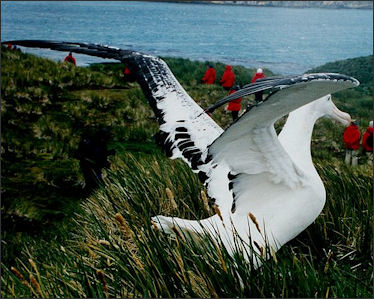
wandering albatross
* Albatrosses are very large sea birds with extraordinary capabilities. Carl Safina wrote in National Geographic, “An albatross is the grandest flying machine on Earth. An albatross is bone, feather, muscle, and the wind. An albatross is its own taunt longbow, the breeze its bowstring, propelling its body forward. An albatross is an art deco bird, striking of pattern, clean of line, epic in travels, heroically faithful. A parent albatross may fly more than 10,000 miles to deliver one meal to its chick...If you could travel millions of miles fueled by clean, self-renewing energy, you’d be an albatross.” [Source: Carl Safina, National Geographic, December 2007; Kennedy Warne, Smithsonian magazine, September 2007; Tui Dek Roy and Mark Jones, Natural History magazine, April 2009]
* There are 21 species of albatross and they fall into three groups: 1) the great albatrosses (the wandering albatross, royal albatross and the nearly extinct Amsterdam albatross); 2) the mollymawks (with nine species); and 3) sooty albatrosses (two species). Mollymawks and sooty albatrosses are smaller than the great albatrosses. Mollymawk comes from a Dutch word meaning “foolish gull.” If all the species combined there are around 3 million albatrosses.
[...]
* The word “albatross” comes from the Portuguese word “alcatraz”, also the source of the name of the famous San Francisco prison, which in turn was derived from the Arabic term “al-cadous”, or “bucket”-mouthed bird — a pelican. Albatrosses are related to petrels. The earliest fossils of recognizable albatrosses and petrels date back to 32 million years ago, and have been found in places as disparate as South Carolina and Germany. By 9 million years ago species very similar to modern albatrosses ranged over the Southern Ocean, North Pacific and North Atlantic.
* In “Moby Dick”, Herman Melville described the albatrosses “vast archangel wings.” The idea that albatrosses are good omens and that killing one is like killing the goose that laid the golden egg is expressed in the Samuel Taylor Coleridge poem “Rime of the Ancient Mariners”: “After shooting an albatross and suffering from poor winds and lack of water the mariner laments, “Ah! Well-a-day! What evil looks/ Had from old and young! / Instead of the cross, the Albatross/ About my neck was hung.”
* Albatrosses have been following fishing vessels and whaling ships since before the time of Melville and Coleridge as loading up on fish offal dumped overboard was much easier the flying around trying to snag fish and squid that swam near the surface — the way albatrosses usually caught their food. Sometimes albatrosses followed ships for days in hopes of getting a handout.
[...]

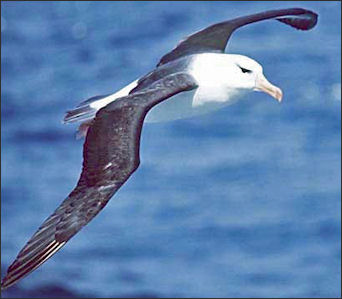
* The largest albatrosses (royal albatrosses and wandering albatrosses) have a wingspan of up 3.65 meters (11.5 feet), the longest of any bird. The smallest albatross (the Indian yellow-nosed albatross) has a wingspan of two meters (6.5 feet), which is still longer than the wingspan of all but the largest NBA basketball players. Albatrosses have been known to fly 80,000 kilometers without touching land and glide for hundreds of kilometers without flapping their wings. A typical 50-year-old albatross is estimated to have flown at least 3.7 million miles.
[...]
[...]
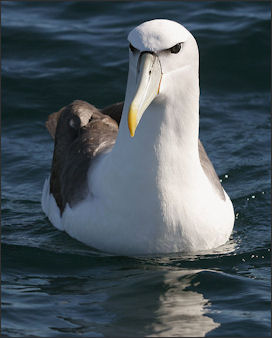
Shy mollymawk
https://factsanddetails.com/world/cat53/sub339/item2185.html
ALBATROSSES
wandering albatross
* Albatrosses are very large sea birds with extraordinary capabilities. Carl Safina wrote in National Geographic, “An albatross is the grandest flying machine on Earth. An albatross is bone, feather, muscle, and the wind. An albatross is its own taunt longbow, the breeze its bowstring, propelling its body forward. An albatross is an art deco bird, striking of pattern, clean of line, epic in travels, heroically faithful. A parent albatross may fly more than 10,000 miles to deliver one meal to its chick...If you could travel millions of miles fueled by clean, self-renewing energy, you’d be an albatross.” [Source: Carl Safina, National Geographic, December 2007; Kennedy Warne, Smithsonian magazine, September 2007; Tui Dek Roy and Mark Jones, Natural History magazine, April 2009]
* There are 21 species of albatross and they fall into three groups: 1) the great albatrosses (the wandering albatross, royal albatross and the nearly extinct Amsterdam albatross); 2) the mollymawks (with nine species); and 3) sooty albatrosses (two species). Mollymawks and sooty albatrosses are smaller than the great albatrosses. Mollymawk comes from a Dutch word meaning “foolish gull.” If all the species combined there are around 3 million albatrosses.
[...]
* The word “albatross” comes from the Portuguese word “alcatraz”, also the source of the name of the famous San Francisco prison, which in turn was derived from the Arabic term “al-cadous”, or “bucket”-mouthed bird — a pelican. Albatrosses are related to petrels. The earliest fossils of recognizable albatrosses and petrels date back to 32 million years ago, and have been found in places as disparate as South Carolina and Germany. By 9 million years ago species very similar to modern albatrosses ranged over the Southern Ocean, North Pacific and North Atlantic.
* In “Moby Dick”, Herman Melville described the albatrosses “vast archangel wings.” The idea that albatrosses are good omens and that killing one is like killing the goose that laid the golden egg is expressed in the Samuel Taylor Coleridge poem “Rime of the Ancient Mariners”: “After shooting an albatross and suffering from poor winds and lack of water the mariner laments, “Ah! Well-a-day! What evil looks/ Had from old and young! / Instead of the cross, the Albatross/ About my neck was hung.”
* Albatrosses have been following fishing vessels and whaling ships since before the time of Melville and Coleridge as loading up on fish offal dumped overboard was much easier the flying around trying to snag fish and squid that swam near the surface — the way albatrosses usually caught their food. Sometimes albatrosses followed ships for days in hopes of getting a handout.
[...]

* The largest albatrosses (royal albatrosses and wandering albatrosses) have a wingspan of up 3.65 meters (11.5 feet), the longest of any bird. The smallest albatross (the Indian yellow-nosed albatross) has a wingspan of two meters (6.5 feet), which is still longer than the wingspan of all but the largest NBA basketball players. Albatrosses have been known to fly 80,000 kilometers without touching land and glide for hundreds of kilometers without flapping their wings. A typical 50-year-old albatross is estimated to have flown at least 3.7 million miles.
[...]
[...]
Shy mollymawk
https://factsanddetails.com/world/cat53/sub339/item2185.html
It was Plato who said, “He, O men, is the wisest, who like Socrates, knows that his wisdom is in truth worth nothing”
Unleash the power of Level 2
Spot liquidity moves with access to US order books.



