



 AI
AI








Tuesday, July 27, 2021 4:40:43 AM
First person charged under Hong Kong's national security law found guilty of terrorism, inciting secession
"Hong Kong Cracks Down on a Pro-Democracy Newspaper
"Hong Kong Court Convicts Democracy Leaders Over Protest March
"China jails citizen journalist Zhang Zhan to four years over coronavirus reporting in Wuhan
"New evidence of Uighur forced labour in China’s cotton industry - BBC News""""
Posted 6m ago
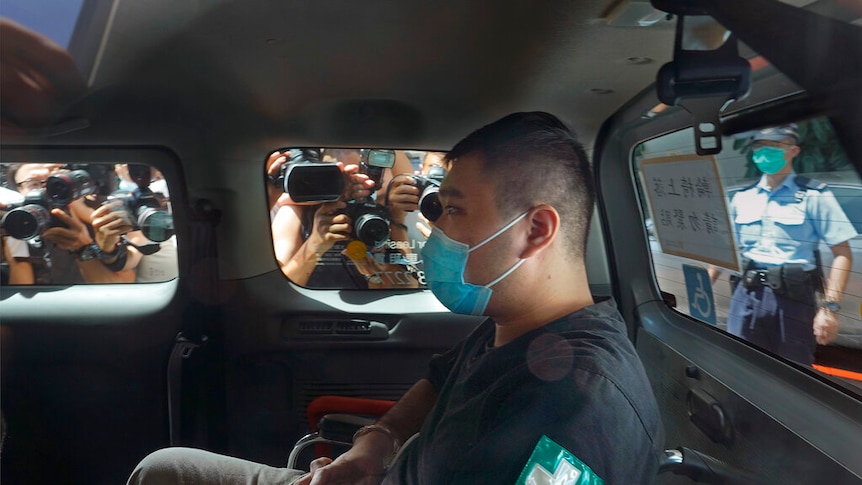
Tong Ying-kit is the first person in Hong Kong to be convicted under the new national security law.(AP: Vincent Yu/File)
The first person charged under Hong Kong's national security law has been found guilty of terrorism and inciting secession in a landmark case with long-term implications for how the legislation reshapes the city's common law traditions.
Key points:
* Tong will be sentenced at a later date and faces up to life behind bars
* The verdict is seen as a test case for the limits of free speech in Hong Kong under new laws
* Tong's judge-only trial focused mainly on the meaning of the slogan "Liberate Hong Kong. Revolution of our times"
Tong Ying-kit, 24, was accused of driving his motorcycle into three riot police while carrying a flag with the protest slogan "Liberate Hong Kong. Revolution of our times", which prosecutors said was secessionist.
The acts over which the former waiter was found guilty happened on July 1, 2020, shortly after the law was enacted.
The date for his sentencing is yet to be announced, but the terrorism and inciting secession charges could lead to a prison term of several years to life.
An alternative charge of dangerous driving causing grievous bodily harm was not considered when the Hong Kong High Court handed down its verdict on Tuesday.
The widely anticipated ruling, much of which hinged on the interpretation of the slogan, imposes new limits on free speech in the former British colony.
Pro-democracy activists and human rights groups have also criticised the decision to deny Tong bail and a jury trial, which have been key features of Hong Kong's rule of law.
Tong's 'political agenda' caused 'grave harm'
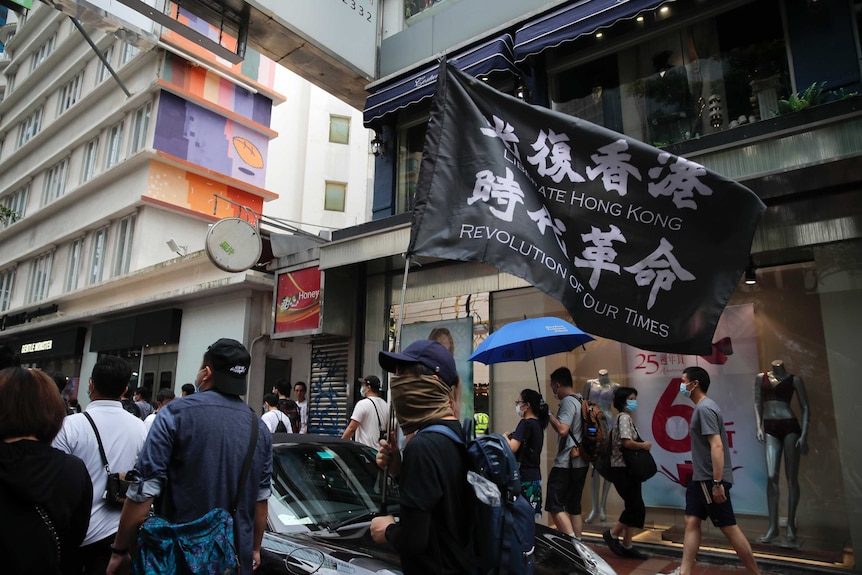
Protesters carry a flag reading "Liberate Hong Kong, revolution of our times" – the same slogan that led to Tong being
convicted.(AP: Kin Cheung)
His trial was presided over by judges Esther Toh, Anthea Pang and Wilson Chan, picked by city leader Carrie Lam to hear national security cases.
Justice Toh read out a summary of the ruling in court, saying: "Such display of the words was capable of inciting others to commit secession."
She added that Tong was aware of the slogan's secessionist meaning and that he intended to communicate this meaning to others.
He also had a "political agenda" and his actions caused "grave harm to society", she said.
Tong had pleaded not guilty to all charges, which stemmed from events on July 1, 2020, shortly after the law was enacted.
Tong's trial focused mostly on the meaning of the slogan, which was ubiquitous during Hong Kong's mass 2019 protests.
What's in Hong Kong's national security law?
Why is the new national security law pushed onto Hong Kong by
Beijing so controversial, and what does it actually say?
Read more > https://www.abc.net.au/news/2020-07-01/what-is-in-hong-kongs-new-china-imposed-national-security-law/12409024
It was chanted on the streets, posted online, scrawled on walls and printed on everything from pamphlets, books, stickers and T-shirts to coffee mugs.
The debates drew on a range of topics, including ancient Chinese history, the US civil rights movement and Malcolm X, to ascertain whether the slogan was secessionist.
Two expert witnesses called by the defence to analyse the slogan's meaning, drawing upon sources including an examination of some 25 million online posts, found "no substantial link" between the slogan and Hong Kong independence.
Tong's defence lawyer had said it was impossible to prove that Tong was inciting secession merely by having used the slogan.
The defence also said there was no evidence Tong committed the act deliberately, that he had avoided crashing into officers, and that his actions could not be considered terrorism since there was no serious violence or harm to society.
The governments in Beijing and Hong Kong have repeatedly said the security law is necessary for bringing stability after the often-violent 2019 protests and that the rights and freedoms promised to the city upon its return to Chinese rule in 1997 remain intact.
The law, imposed by Beijing in June 2020, punishes what China sees as subversion, secession, terrorism and collusion with foreign forces.
More than 100 people have been arrested under the security legislation.
The government has said all prosecutions have been handled independently and according to law, and that legal enforcement action has nothing to do with the political stance, background or profession of those arrested.
ABC/wires
https://www.abc.net.au/news/2021-07-27/first-person-charged-hong-kong-security-law-verdict/100327446
-
The faces of the Hong Kong 47 — Jailed and bailed under Beijing's national security law
By China correspondent Bill Birtles and Emily Clark
Thursday 8 Jul 2021 at 5:05am, updated Thu 8 Jul 2021 at 10:30am
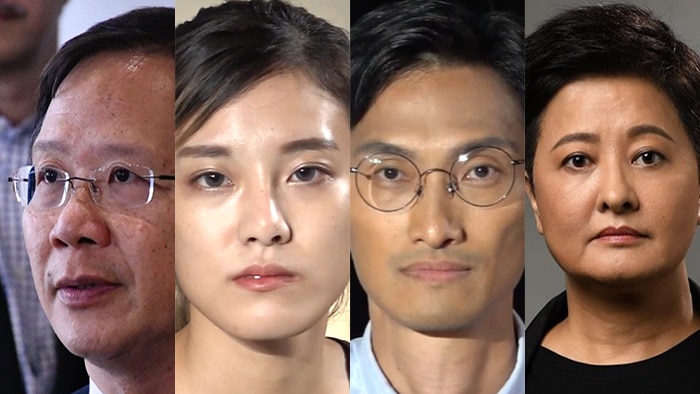
Kowk Ka-ki, Prince Wong Ji-yuet, Eddie Chu Hoi-dick and Helena Wong Pik-wan have been
charged with subversion. (Supplied: VOA, Stand News, Facebook)
A group of 47 democratic politicians and activists charged with subversion are due in a Hong Kong court today in a case that has left members of the city's once-vibrant pro-democracy movement demoralised and considering exile.
Key points:
* Forty seven people charged under Hong Kong's new national security law are in court today
* They are charged with conspiracy to commit subversion
* Experts say in one year, China has jailed, bailed and exiled multiple generations of political leaders in Hong Kong
Among those in court are a prominent legal scholar, health care workers, a disability activist and a union founder.
To their supporters, they were Hong Kong's hope for democracy and a fair future.
To government prosecutors, they are dangerous criminals who deserve to be behind bars for three years, possibly for life.
Against a backdrop of other arrests, increasing censorship, attacks on the media and demands for pledges of loyalty to the government, many Hong Kongers are left with simmering rage but nowhere to take their fight.
From his new home in exile in New Zealand, veteran pro-democracy campaigner and retired professor Joseph Cheng said the 47 defendants "cover many generations of active political leaders".
[...]

Sam Cheung, Winnie Yu, Joshua Wong and Andrew Chiu. (Supplied/Reuters: Stand News,
VOA, Tyrone Siu)
[...]
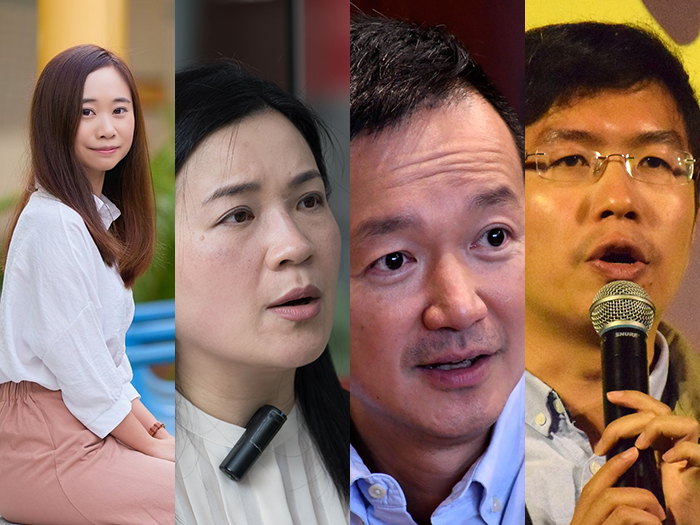
Tiffany Yuen, Carol Ng Man Yee, Raymond Chan and Au Nok hin. (Supplied: Facebook, VOA,
HK Labor party under Creative Commons 2.0))
[...]
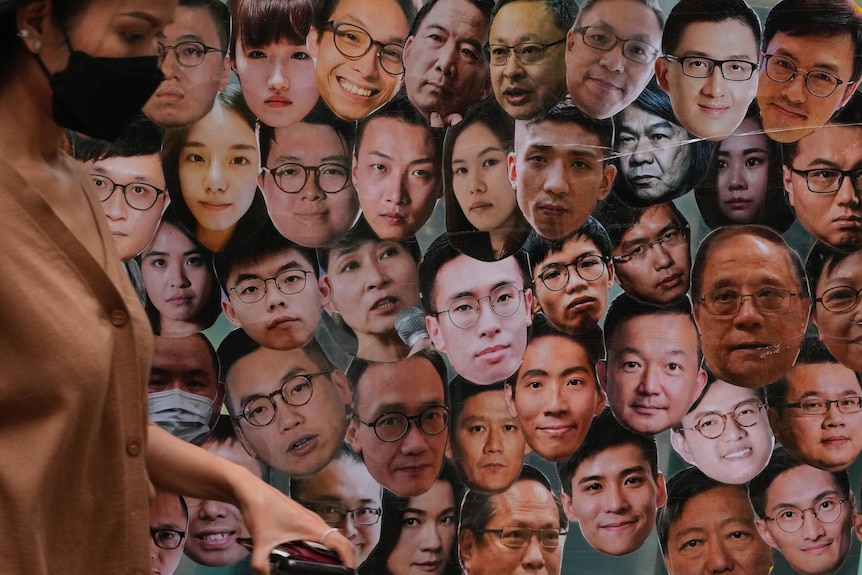
Every person whose photo hangs on this wall in Hong Kong is a pro-democracy activist who has been arrested.
(AP: Kin Cheung)
https://www.abc.net.au/news/2021-07-08/hong-kong-47-face-chinese-security-law/100264032
If you wonder what faces of cool courage look like these days spend some time on those.
"Hong Kong Cracks Down on a Pro-Democracy Newspaper
"Hong Kong Court Convicts Democracy Leaders Over Protest March
"China jails citizen journalist Zhang Zhan to four years over coronavirus reporting in Wuhan
"New evidence of Uighur forced labour in China’s cotton industry - BBC News""""
Posted 6m ago
Tong Ying-kit is the first person in Hong Kong to be convicted under the new national security law.(AP: Vincent Yu/File)
The first person charged under Hong Kong's national security law has been found guilty of terrorism and inciting secession in a landmark case with long-term implications for how the legislation reshapes the city's common law traditions.
Key points:
* Tong will be sentenced at a later date and faces up to life behind bars
* The verdict is seen as a test case for the limits of free speech in Hong Kong under new laws
* Tong's judge-only trial focused mainly on the meaning of the slogan "Liberate Hong Kong. Revolution of our times"
Tong Ying-kit, 24, was accused of driving his motorcycle into three riot police while carrying a flag with the protest slogan "Liberate Hong Kong. Revolution of our times", which prosecutors said was secessionist.
The acts over which the former waiter was found guilty happened on July 1, 2020, shortly after the law was enacted.
The date for his sentencing is yet to be announced, but the terrorism and inciting secession charges could lead to a prison term of several years to life.
An alternative charge of dangerous driving causing grievous bodily harm was not considered when the Hong Kong High Court handed down its verdict on Tuesday.
The widely anticipated ruling, much of which hinged on the interpretation of the slogan, imposes new limits on free speech in the former British colony.
Pro-democracy activists and human rights groups have also criticised the decision to deny Tong bail and a jury trial, which have been key features of Hong Kong's rule of law.
Tong's 'political agenda' caused 'grave harm'
Protesters carry a flag reading "Liberate Hong Kong, revolution of our times" – the same slogan that led to Tong being
convicted.(AP: Kin Cheung)
His trial was presided over by judges Esther Toh, Anthea Pang and Wilson Chan, picked by city leader Carrie Lam to hear national security cases.
Justice Toh read out a summary of the ruling in court, saying: "Such display of the words was capable of inciting others to commit secession."
She added that Tong was aware of the slogan's secessionist meaning and that he intended to communicate this meaning to others.
He also had a "political agenda" and his actions caused "grave harm to society", she said.
Tong had pleaded not guilty to all charges, which stemmed from events on July 1, 2020, shortly after the law was enacted.
Tong's trial focused mostly on the meaning of the slogan, which was ubiquitous during Hong Kong's mass 2019 protests.
What's in Hong Kong's national security law?
Why is the new national security law pushed onto Hong Kong by
Beijing so controversial, and what does it actually say?
Read more > https://www.abc.net.au/news/2020-07-01/what-is-in-hong-kongs-new-china-imposed-national-security-law/12409024
It was chanted on the streets, posted online, scrawled on walls and printed on everything from pamphlets, books, stickers and T-shirts to coffee mugs.
The debates drew on a range of topics, including ancient Chinese history, the US civil rights movement and Malcolm X, to ascertain whether the slogan was secessionist.
Two expert witnesses called by the defence to analyse the slogan's meaning, drawing upon sources including an examination of some 25 million online posts, found "no substantial link" between the slogan and Hong Kong independence.
Tong's defence lawyer had said it was impossible to prove that Tong was inciting secession merely by having used the slogan.
The defence also said there was no evidence Tong committed the act deliberately, that he had avoided crashing into officers, and that his actions could not be considered terrorism since there was no serious violence or harm to society.
The governments in Beijing and Hong Kong have repeatedly said the security law is necessary for bringing stability after the often-violent 2019 protests and that the rights and freedoms promised to the city upon its return to Chinese rule in 1997 remain intact.
The law, imposed by Beijing in June 2020, punishes what China sees as subversion, secession, terrorism and collusion with foreign forces.
More than 100 people have been arrested under the security legislation.
The government has said all prosecutions have been handled independently and according to law, and that legal enforcement action has nothing to do with the political stance, background or profession of those arrested.
ABC/wires
https://www.abc.net.au/news/2021-07-27/first-person-charged-hong-kong-security-law-verdict/100327446
-
The faces of the Hong Kong 47 — Jailed and bailed under Beijing's national security law
By China correspondent Bill Birtles and Emily Clark
Thursday 8 Jul 2021 at 5:05am, updated Thu 8 Jul 2021 at 10:30am
Kowk Ka-ki, Prince Wong Ji-yuet, Eddie Chu Hoi-dick and Helena Wong Pik-wan have been
charged with subversion. (Supplied: VOA, Stand News, Facebook)
A group of 47 democratic politicians and activists charged with subversion are due in a Hong Kong court today in a case that has left members of the city's once-vibrant pro-democracy movement demoralised and considering exile.
Key points:
* Forty seven people charged under Hong Kong's new national security law are in court today
* They are charged with conspiracy to commit subversion
* Experts say in one year, China has jailed, bailed and exiled multiple generations of political leaders in Hong Kong
Among those in court are a prominent legal scholar, health care workers, a disability activist and a union founder.
To their supporters, they were Hong Kong's hope for democracy and a fair future.
To government prosecutors, they are dangerous criminals who deserve to be behind bars for three years, possibly for life.
Against a backdrop of other arrests, increasing censorship, attacks on the media and demands for pledges of loyalty to the government, many Hong Kongers are left with simmering rage but nowhere to take their fight.
From his new home in exile in New Zealand, veteran pro-democracy campaigner and retired professor Joseph Cheng said the 47 defendants "cover many generations of active political leaders".
[...]
Sam Cheung, Winnie Yu, Joshua Wong and Andrew Chiu. (Supplied/Reuters: Stand News,
VOA, Tyrone Siu)
[...]
Tiffany Yuen, Carol Ng Man Yee, Raymond Chan and Au Nok hin. (Supplied: Facebook, VOA,
HK Labor party under Creative Commons 2.0))
[...]
Every person whose photo hangs on this wall in Hong Kong is a pro-democracy activist who has been arrested.
(AP: Kin Cheung)
https://www.abc.net.au/news/2021-07-08/hong-kong-47-face-chinese-security-law/100264032
If you wonder what faces of cool courage look like these days spend some time on those.
It was Plato who said, “He, O men, is the wisest, who like Socrates, knows that his wisdom is in truth worth nothing”
Discover What Traders Are Watching
Explore small cap ideas before they hit the headlines.



