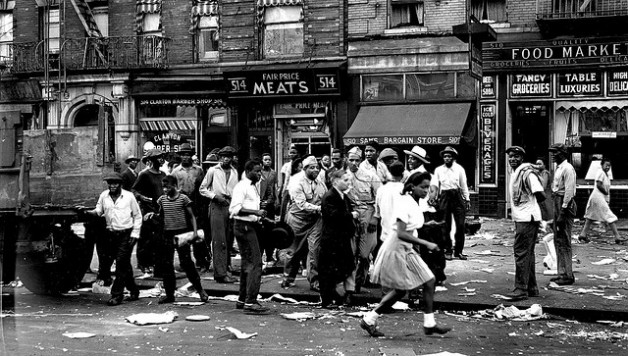
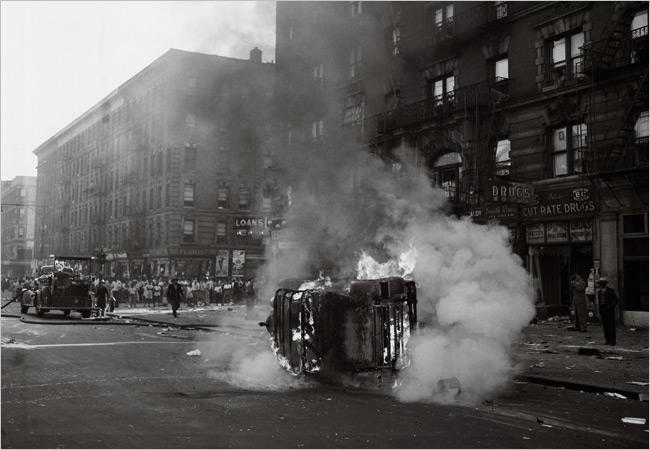
conix, Sowell's quiet Harlem of the '40s and '50s - 8 Facts You May Not Know About The Harlem Riot of 1943
By Ricky Riley | August 2, 2014 CommentsComments
Hell in Harlem
During the 1940s and ’50s, Black people across the U.S. were hopeful that their economic prospects would improve with the ending of World War II. However, many, including those living in Harlem, found that the end of the war effort failed to improve their financial and social fortune.
The social inequality was particularly hard to bear for African-Americans in 1943, and was the root cause of the Detroit Riots that same year. They had hoped that their service during World War II would gain them respect from white Americans, however, they were continuously harassed because of their skin color.
Many returning veterans faced Jim Crow laws and these inequalities, along with the economic hardships endured by Black communities, were instrumental in the inducement of rioting throughout America.
The Harlem riot was incited by a rumor of police brutality against an African-American man, Robert Bandy, a World War II veteran, who inquired about the arrest of a Black woman, Margie Polite, for disorderly conduct at Hotel Braddock. Bandy sought to have Polite released, but it was incorrectly rumored that he had been killed in a confrontation with police.
The ensuing riots flared from Aug. 1 to Aug. 2 at three different locations. Crowds initially gathered in front of hotel and expanded to two other locations- Sydenham Hospital, where it was believed Bandy was taken for treatment, and Manhattan’s 28th Precinct stationhouse.
The underlying cause of the riot stemmed from the poor conditions Black people were forced to live in. At the beginning of the 1940s, 485,000 African-Americans lived in New York City and approximately 300,000 of them resided in Harlem. Overcrowded living conditions and unequal employment opportunities plagued the residents, making Harlem a hotbed of racial tension.
I remember reading some of Angela Davis's works back in the '60s and '70s, think it was. One of the points she made was that the banks who took so much money out of Harlem re-invested so little back in. If even then any.
That sort of fact Thomas Sowell would undoubtedly conveniently ignore.
Aside: Just saw beside me, i still have at least one of Angela's works
If They Come in the Morning: Voices of Resistance is a collection of writings about U.S. legal trials and prisons, edited by Angela Davis and published in 1971. Contributors included Black Panther Party members and the Soledad Brothers. As Davis' first book, it contains description of her experiences in prison. The book was positively received by African-American and communist media of the time. https://en.wikipedia.org/wiki/If_They_Come_in_the_Morning
You and others of your - know it or not - racist crowd should read that one of Vosburg's. And some of Angela Davis's work.
It was Plato who said, “He, O men, is the wisest, who like Socrates, knows that his wisdom is in truth worth nothing”


 Market Data
  Markets


 AI
AI