



 AI
AI








Thursday, October 15, 2020 1:16:44 AM
More amazing. The first, extra touching
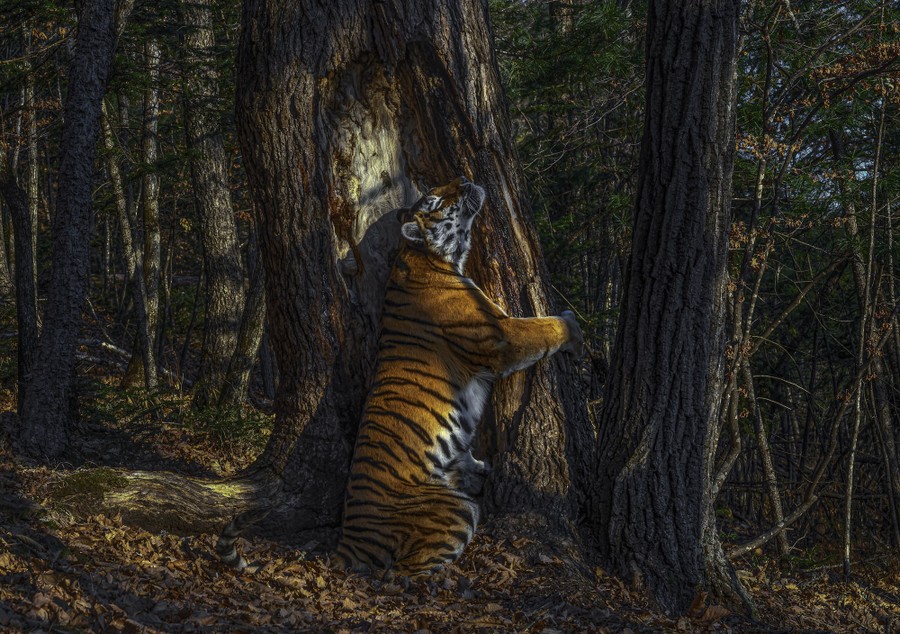
1. The Embrace. Grand Title Winner and Animals in their Environment Winner: A tigress hugs an ancient Manchurian fir, rubbing her cheek against the bark to leave secretions from her scent glands. She is an Amur, or Siberian, tiger, in Russia's Land of the Leopard National Park. Hunted almost to extinction in the past century, the population is still threatened by poaching and logging, which also impact their prey—mostly deer and wild boar. #
© Sergey Gorshkov / Wildlife Photographer of the Year
This as yours most like Trump, though a much more amazing parasite
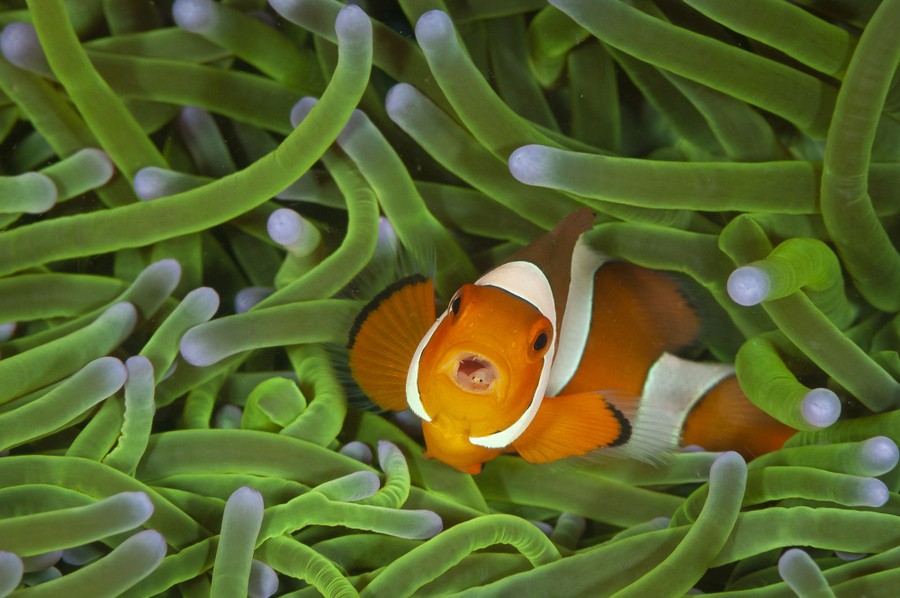
4. A Mean Mouthful. 11-14 Years Old Winner: On a diving holiday in North Sulawesi, Indonesia, Sam Sloss stopped to watch the behavior of a group of clownfish as they swam with hectic and repeated patterns in and out and around their home, a magnificent anemone. He was intrigued by the expression of one fish, its mouth being constantly open, holding something. Rather than following the moving fish in his viewfinder, Sloss positioned himself where he knew it would come back into the frame. It was only when he downloaded the photos that he saw tiny eyes peeping out of its mouth. It was a "tongue-eating louse," a parasitic isopod that swims in through the gills as a male, changes sex, grows legs, and attaches itself to the base of the tongue, sucking blood. #
© Sam Sloss / Wildlife Photographer of the Year
First look made me laugh at an old professor
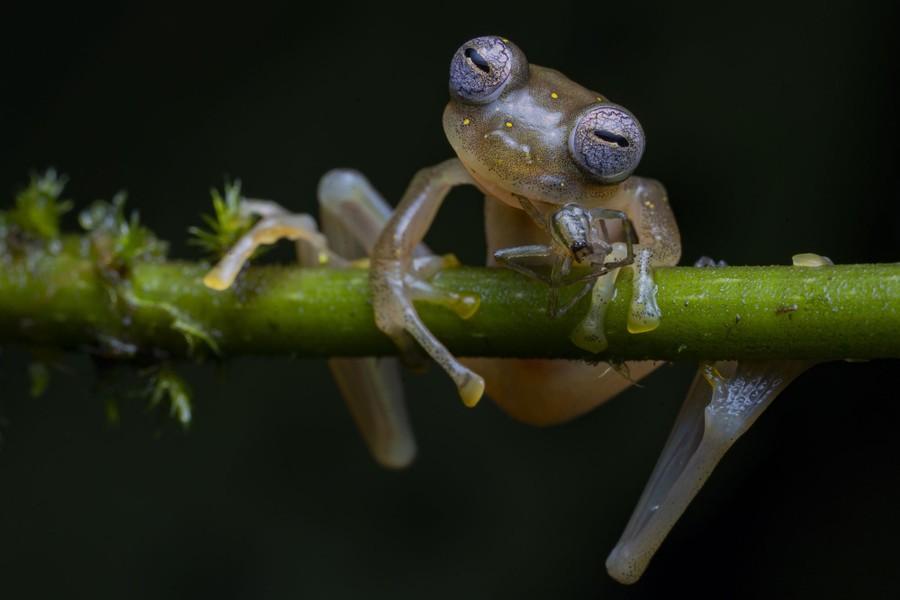
15. Life in the Balance. Behavior Amphibians and Reptiles Winner: A Manduriacu glass frog snacks on a spider in the foothills of the Andes, in northwestern Ecuador. As big consumers of invertebrates, glass frogs play a key part in maintaining balanced ecosystems. That night, Jaime Culebras's determination to share his passion for them had driven him to walk for four hours, in heavy rain, through the forest to reach the frogs’ streams in the Manduriacu Reserve. But the frogs were elusive and the downpour was growing heavier and heavier. As he turned back, he was thrilled to spot one small frog clinging to a branch, its eyes shimmering like mosaics. #
© Jaime Culebras / Wildlife Photographer of the Year
Actually, this is really an incredible catch too
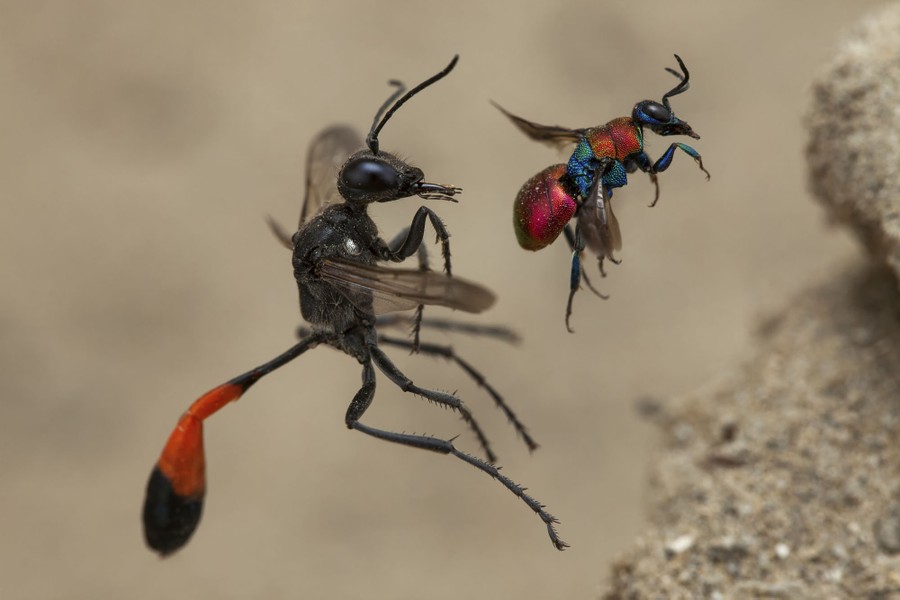
2. A Tale of Two Wasps. Behavior Winner: This remarkable simultaneous framing of a red-banded sand wasp (left) and a cuckoo wasp about to enter next-door nest holes is the result of painstaking preparation. The female cuckoo wasp—just 6 millimeters long—parasitizes the nests of certain solitary digger wasps, laying her eggs in her hosts’ burrows so that her larvae can feast on their eggs or larvae. The much larger red-banded sand wasp lays her eggs in her own burrow, which she provisions with caterpillars, one for each of her young to eat when they emerge. Frank Deschandol's original aim was to photograph the vibrant cuckoo wasp. In a sandy bank on a brownfield site near his home in Normandy, France, he located tiny digger wasp burrows suitable for a cuckoo wasp to use. He then set up an infrared beam that, when broken by a wasp, would trigger the super-fast shutter system he had built. Despite the extremely narrow depth of field and tiny subjects, he captured not only the cuckoo wasp but also the sand wasp. #
© Frank Deschandol / Wildlife Photographer of the Year
Your link - https://www.theatlantic.com/photo/2020/10/winners-wildlife-photographer-year-2020/616710/
1. The Embrace. Grand Title Winner and Animals in their Environment Winner: A tigress hugs an ancient Manchurian fir, rubbing her cheek against the bark to leave secretions from her scent glands. She is an Amur, or Siberian, tiger, in Russia's Land of the Leopard National Park. Hunted almost to extinction in the past century, the population is still threatened by poaching and logging, which also impact their prey—mostly deer and wild boar. #
© Sergey Gorshkov / Wildlife Photographer of the Year
This as yours most like Trump, though a much more amazing parasite
4. A Mean Mouthful. 11-14 Years Old Winner: On a diving holiday in North Sulawesi, Indonesia, Sam Sloss stopped to watch the behavior of a group of clownfish as they swam with hectic and repeated patterns in and out and around their home, a magnificent anemone. He was intrigued by the expression of one fish, its mouth being constantly open, holding something. Rather than following the moving fish in his viewfinder, Sloss positioned himself where he knew it would come back into the frame. It was only when he downloaded the photos that he saw tiny eyes peeping out of its mouth. It was a "tongue-eating louse," a parasitic isopod that swims in through the gills as a male, changes sex, grows legs, and attaches itself to the base of the tongue, sucking blood. #
© Sam Sloss / Wildlife Photographer of the Year
First look made me laugh at an old professor
15. Life in the Balance. Behavior Amphibians and Reptiles Winner: A Manduriacu glass frog snacks on a spider in the foothills of the Andes, in northwestern Ecuador. As big consumers of invertebrates, glass frogs play a key part in maintaining balanced ecosystems. That night, Jaime Culebras's determination to share his passion for them had driven him to walk for four hours, in heavy rain, through the forest to reach the frogs’ streams in the Manduriacu Reserve. But the frogs were elusive and the downpour was growing heavier and heavier. As he turned back, he was thrilled to spot one small frog clinging to a branch, its eyes shimmering like mosaics. #
© Jaime Culebras / Wildlife Photographer of the Year
Actually, this is really an incredible catch too
2. A Tale of Two Wasps. Behavior Winner: This remarkable simultaneous framing of a red-banded sand wasp (left) and a cuckoo wasp about to enter next-door nest holes is the result of painstaking preparation. The female cuckoo wasp—just 6 millimeters long—parasitizes the nests of certain solitary digger wasps, laying her eggs in her hosts’ burrows so that her larvae can feast on their eggs or larvae. The much larger red-banded sand wasp lays her eggs in her own burrow, which she provisions with caterpillars, one for each of her young to eat when they emerge. Frank Deschandol's original aim was to photograph the vibrant cuckoo wasp. In a sandy bank on a brownfield site near his home in Normandy, France, he located tiny digger wasp burrows suitable for a cuckoo wasp to use. He then set up an infrared beam that, when broken by a wasp, would trigger the super-fast shutter system he had built. Despite the extremely narrow depth of field and tiny subjects, he captured not only the cuckoo wasp but also the sand wasp. #
© Frank Deschandol / Wildlife Photographer of the Year
Your link - https://www.theatlantic.com/photo/2020/10/winners-wildlife-photographer-year-2020/616710/
It was Plato who said, “He, O men, is the wisest, who like Socrates, knows that his wisdom is in truth worth nothing”
Discover What Traders Are Watching
Explore small cap ideas before they hit the headlines.



