



 AI
AI







Monday, June 15, 2020 11:29:11 PM
5) With 12 U.S.C. § 4617(b)(2)(J) the FHFA can act in the best interest of itself and violates thereby their own statute to “preserve and conserve” 12 U.S. Code §?4617(2)(B)(iv)
What court has said this?
7) Sweeney states: “Otherwise stated, Fannie was not in financial distress or otherwise at risk of insolvency.
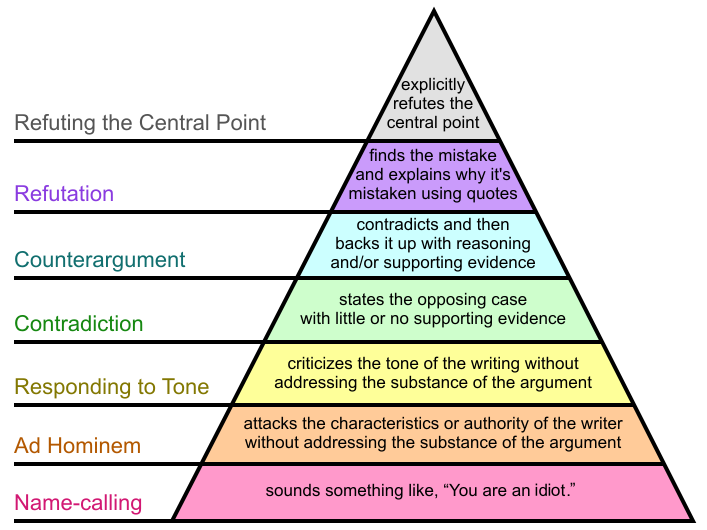
This is Sweeney repeating an allegation of the plaintiffs, which must be taken as true at the motion to dismiss stage. This is not her legal opinion.
8) The warrant is one step away also according to Sweeney one step away
Sweeney did not address the warrants at all. Any reading of her opinions regarding the warrants is wishful thinking and not based on facts.
9) Oral arguments like mob and death grip, also give away some issues that are surfacing
More wishful thinking. In the Perry case, Judge Ginsburg made famous "salt the earth" comments about the NWS and then ruled to affirm Lamberth's dismissal. Sweeney's comments in oral arguments cannot be construed as signaling her final opinion.
Your list of "facts" is unfortunately pervaded by assumptions and wishful thinking. Please stick to actual facts next time.
Then after these facts we can conclude:
1) The company was solvent at time conservatorship was implemented
2) The funds were sufficient according to regulation
3) The FHFA did not conserve and preserve
4) The government has been fighting shareholders
#1 and 2 are not in doubt. FnF were placed into conservatorship due to the acquiesence of the boards of directors at the time.
#3 is at issue in the courts, and has not been ruled on by Judge Sweeney yet.
#4 is certainly true.
Then it raises other questions as:
1) The Government lacks authority to takeover adequately chaptalized companies
2) The Government takes property and does not want to pay for that taking
3) The Government is changing the rules as we go
4) The Government made a deal with itself (when declared unconstitutional in Collins)
#1 is moot because the boards consented to conservatorship; coercion has not been proven by plaintiffs.
#2 and 4 are things that Sweeney has yet to rule on, and won't until the case goes to trial. You assuming these things are true is a fallacy.
#3 is an irrelevant accusation.
however, deleting things from HERA is difficult
No, it isn't. The Fifth Circuit en banc panel already ruled that HERA's unconstitutionality can be remedied by only changing the removal clause from "for cause" to "at will", with no other changes made. What you call "difficult" has already happened!
suddenly the lines in HERA that give the power to the director must be replaced with either a “multimember board” which can only regulate on rules
This is false, as proven by the Fifth Circuit. Thus everything that follows is false as well.
Then : The Court of Federal Claims and the Court of Appeals for the Federal Circuit have recognized that only one thing matters for a takings case and that is the value of the property on the date of the alleged taking.
This kills any hopes of common shareholders, current or past, getting any more than a token amount. One must pay attention to the value of the shares on the dates of the lawsuits compared to the dates of the alleged takings/illegal exactions.
Then to make sense of all the above we can conclude
1) Collins needs to be decided (“for cause” or “at will”)
2) Washington Federal needs to be decided not settled to exclude new lawsuits from old shareholders
3) Then the other 38 lawsuits need to be settled with the different demands among the Common, Preferred, Direct, Derivative, and class action lawsuit claims
1) Yes, this is important.
2) Washington Federal will always include only those who held shares on September 5 2008. THAT IS ALL. Their case does NOT ask for any payout to anyone who bought shares after that date.
3) Sweeney's dismissal of all direct claims, so far, simplifies things considerably. If the companies are the ones who would benefit from any damage award, the share holdings of any plaintiffs, as well as the dates on which they bought those shares, don't matter.
Then for most lawsuits to go away it needs to be recognized that either it was lawful or unlawful to enter into conservatorship
Wrong again, and this betrays an utter ignorance of the cases and what they entail. This matters only for the Washington Federal case; no other case challenges anything other than the NWS.
Then we know Sweeney has 124B (60/40) so that is 74B for Fannie and 50B for Freddie
Again, this is only Sweeney repeating plaintiffs' allegations, which must be taken as true at the motion to dismiss stage. She can easily turn around and deny these allegations at trial.
Then depending on the outcome of the court we have multiple situations but my best guess is:
Your "best guess" is woefully inadequate here. I suggest studying exactly what the plaintiffs ask for and the authority Sweeney's court has, because your response shows a complete misunderstanding of these things.
Recent FNMA News
- Fannie Mae Reports Net Income of $3.7 Billion for First Quarter 2026 • PR Newswire (US) • 04/29/2026 11:24:00 AM
- Fannie Mae Releases March 2026 Monthly Summary • PR Newswire (US) • 04/28/2026 12:30:00 PM
- Fannie Mae Plans to Report First Quarter 2026 Financial Results on April 29, 2026 • PR Newswire (US) • 04/27/2026 12:00:00 PM
- Fannie Mae Announces Credit Score Model Updates to Advance Credit Score Modernization • PR Newswire (US) • 04/22/2026 05:02:00 PM
- Fannie Mae Releases February 2026 Monthly Summary • PR Newswire (US) • 03/26/2026 08:05:00 PM
- Fannie Mae Announces Results of Tender Offer for Any and All of Certain CAS Notes • PR Newswire (US) • 03/02/2026 02:00:00 PM
- Fannie Mae Releases January 2026 Monthly Summary • PR Newswire (US) • 02/26/2026 09:05:00 PM
- Fannie Mae Announces Tender Offer for Any and All of Certain CAS Notes • PR Newswire (US) • 02/23/2026 02:00:00 PM



