



 AI
AI








Tuesday, July 02, 2019 4:12:31 AM
Inside Bill Browder's blood money battle with Vladimir Putin
"Sergei Skripal and the 14 deaths under scrutiny"
[...]
"Anyone Putin deems to have betrayed Russia is at the highest level of risk," said Bill Browder .. http://www.bbc.co.uk/news/world-europe-42513616 , a
former Moscow-based financier who led a campaign to impose sanctions on top Russian officials accused of corruption - sanctions that enraged Mr Putin.
Bill Browder's Hermitage Capital Management was one of Russia's largest foreign portfolio investors. Now Vladimir Putin wants him in jail. But the American-born British citizen keeps following paper trails to expose Russia's money laundering
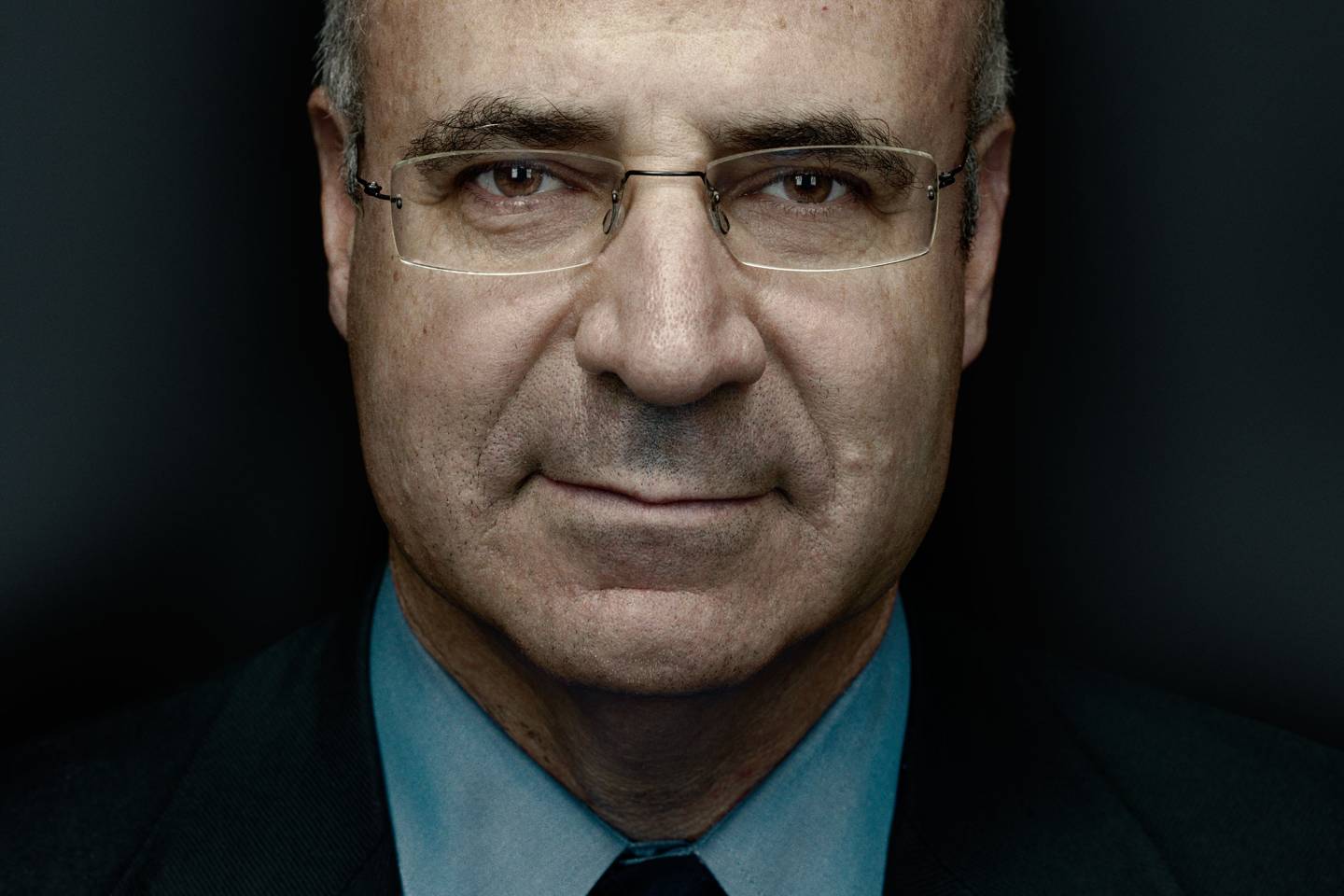
Nadav Kander
By Greg Williams
Thursday 10 January 2019
On May 29 2018, the financier-turned-campaigner Bill Browder made a trip to Madrid to meet José Grinda González, a special prosecutor at the Spanish attorney general’s office who has had significant success in dismantling Russian transnational crime syndicates. Browder intended to share evidence he had uncovered regarding €30m in criminal proceeds that had been used to buy luxury properties on the coast of Spain.
At 09.40 the following morning, as he was leaving for an 11:00 meeting, Browder found two officers from the Spanish National Police waiting outside his hotel room. They asked Browder for ID before informing him that they had an Interpol warrant and that he was being placed under arrest. The police were accompanied by the general manager of the hotel, who requested that Browder be allowed to pack. He stepped back into his room and, rather than pick up his toothbrush, sent a tweet.
“Urgent: Just was arrested by Spanish police in Madrid on a Russian Interpol arrest warrant. Going to the police station right now.”
[...]
Following Trump’s astonishing statement regarding the hacking of the 2016 US general election – that he believed Putin’s words over those of his own intelligence agencies (an act that the former director of the CIA John Brennan described as “nothing short of treasonous”) – Putin suggested that there might be a trade: 12 Russian intelligence operatives indicted by US authorities, in exchange for Obama-era officials such as Michael McFaul, ambassador to Moscow from 2012 to 2014, and 11 others Russia deemed had interfered in its affairs or committed crimes – including Browder. Trump nodded along, later describing the proposed arrangement as “an incredible offer”.
See also:
Deutsche Bank Faces Criminal Investigation for Potential Money-Laundering Lapses
"Donald Trump Scrambles To Block Democrats From His Finances | The Beat With Ari Melber | MSNBC"
https://investorshub.advfn.com/boards/read_msg.aspx?message_id=149700581
“Putin is an extremely shrewd guy and he’s studied Trump perfectly,” Browder says. “What he was banking on was Trump’s lack of preparation for the summit; the fact that Trump would never read a document would mean that he was effectively too ill-prepared to even know that this was a ridiculous deal that any reasonable person would reject outright.”
Despite Trump’s apparent willingness to acquiesce to Putin’s request regarding Browder, it was unlikely to have the desired effect. First, the US has no extradition treaty with Russia, meaning that any attempt would be blocked by the courts. Second, Putin needs to address Theresa May, not Trump – Chicago-born Browder is now a UK citizen – and May would doubtless not prove as fungible as the US President.
“It’s a problem for Putin, because one of the deals that’s kept the Russian elite so happy with him for so long was this deal where ‘if you give me loyalty you can enrich yourselves and you can benefit from corruption from money laundering with my eye either turned away or enabling you’,” Judah says.
[...]
In November 2009, his lawyer, Sergei Magnitsky, who had uncovered an elaborate fraud in which Browder’s companies were used to rob the Russian tax authorities of $230m, was murdered while in detention. Magnitsky, who was suffering from gallstones, acute calculous cholecystitis and acute pancreatitis, was denied medical care before being beaten to death. Russian authorities claim that he died of natural causes. This set in motion Browder’s crusade, and the Sergei Magnitsky Rule of Law Accountability Act was passed in the US in 2012. In May 2018 the UK parliament voted a “Magnitsky amendment” to the Sanctions and Anti-Money Laundering Act, which enables UK courts to impose penalties such as asset freezes and visa restrictions on those who violate human rights.
Russian authorities claim that, while operating in Moscow, Browder purchased shares in Gazprom, the strategically important energy company, through Russian-owned subsidiaries – and accuse him of gaining tax advantages. Browder maintains that he acted legally and in a way that was common practice among foreign investors.
There has been criticism of Browder in some quarters; most recently a piece in The New Yorker in August 2018 suggested that the financier initially only took on the kleptocrats as an act of self-service – his actions were intended to increase the value of his fund.
“The stealing going on in these companies was just so infuriating that it was both an emotional thing and a financial thing to fight it,” he responds. “I had a fiduciary responsibility to stop stealing from my clients – and that was for money. And then you couldn’t help thinking this was just wrong and bad and not wanting them to get away with it. It’s not like I had one position before and then a second position afterwards. Lots of people can have lots of opinions about why I did things, but the reason I did it was because it was fucking outrageous and unprofitable.”
[...]
“It’s much bigger than a Russian problem – this applies to Brazil, China, Malaysia, the Philippines, Afghanistan… Any country with a corruption problem,” says investigative journalist Oliver Bullough, the author of Moneyland, a bracing account of the ways that criminal elites move money around the global financial system. “But it’s very difficult to put a number on that. The data on illicit financial flows and academic investigations in money laundering is very poorly developed.”
One way of understanding quite how much Browder has upset the Kremlin is the infamous meeting at Trump Tower in June 2016, at which some of Donald Trump’s most trusted lieutenants – Don Junior, Jared Kushner and then campaign manager Paul Manafort (who since admitted to committing several federal crimes) – met a Russian lawyer, Natalia Veselnitskaya.
While the exact nature of that conversation remains unclear and is part of the Mueller investigation, a memo of Veselnitskaya’s talking points, obtained by Foreign Policy .. https://foreignpolicy.com/2017/10/16/heres-memo-kremlin-lawyer-took-to-meeting-donald-trump-jr/ , demonstrates that there was a disconnect regarding the purpose of the meeting: Trump officials were under the impression that they were to hear damaging information on Hillary Clinton from a Kremlin-connected lawyer; while Veselnitskaya – who represents a client who has had $14m frozen – was lobbying for the repeal of Magnitsky.
Another tactic to disrupt Browder’s effectiveness is to leverage the tools of international mutual legal assistance and international justice in the form of the Interpol red notice, in effect an international arrest warrant. The first time Browder learnt that this type of instrument of law enforcement had been used in order to detain him, he was in Norway, giving a speech at the 2013 Oslo Freedom Forum, an event that has become one of the pre-eminent gatherings of human-rights activists around the world.
Browder was informed by a sympathiser of the Interpol warrant – he says he examined the document on his BlackBerry moments before going on stage, and realised that leaving Norway could prove problematic. After finishing his talk he proceeded to the airport where, to his relief, a border guard, on seeing a British passport, waved him through without swiping the document. On return to London, Browder contacted Interpol and informed them that the red notice should be removed. Initially, Interpol insisted that there was no such warrant. Browder persisted until Interpol’s data protection body, the Commission for the Control of Files, ruled that not only did the file exist, but the request breached Interpol's constitution. It was deleted. Since then, there have been six requests for red notices, including the one served in Madrid, against Browder.
[...]
There are currently Magnitsky Acts in place in the US, Canada, UK, Estonia, Lithuania, Latvia and Gibraltar, and initiatives in place in France, Denmark, the Netherlands, Sweden and Australia. Browder met senior Irish officials in November. In Germany, Browder has influential backers – he met the head of the Bundestag's foreign affairs committee, Norbert Röttgen, in June – but expects resistance from vested interests, and institutional inertia: “People who work in government don’t get any upside from doing stuff which has opposition,” he says. “[But] the more resistance, the more likely it is to happen because the resistance is what creates all the political drama which then creates all the noise and generally galvanises people that might not have already been interested in doing it.”
If legislation is introduced in the Bundestag, it will be the eighth country where there is a tangible parliamentary initiative. Admittedly, the timeline of any advocacy campaign is elastic: the US passed a Magnitsky Act in two years, while it took eight for the amendment in the UK. Browder argues that there are some European countries that pay lip service to Magnitsky but for complex political reasons defer to the EU, which has proved ineffectual.
In 2014, the European Parliament unanimously passed the act. However, the body has no power to expedite policy – action is the purview of the Foreign Affairs Council. In November 2014 its chair, Federica Mogherini, argued that the EU had already adopted restrictive measures over Ukraine, directed at Russia's banking and energy sector, and named officials – and that “additional sanctions targeting human-rights violators would not be the appropriate response”.
Browder argues that sanctions do little harm to elites; rather, they impact the wider population. His advocacy for Magnitsky is founded on the belief that it specifically targets named individuals who have committed crimes. The caveat, of course, is that identifying individuals is extremely difficult.
“The idea that we can freeze money that belongs to human-rights abusers is predicated on the assumption that we know what money belongs to human-rights abusers,” Oliver Bullough says. “And we don’t. Magnitsky is a very attractive cherry on a cake that has yet to be made."
As well as the initiative to have Magnitsky on the statute book in as many countries as possible, Browder works with a full-time group of forensic researchers working on tracing the movement of the proceeds of the $230m theft that Magnitsky exposed. There are currently 15 investigations in various states of progress, and Browder says that the group has determined thus far that money has been funnelled to 26 countries.
In 2018, Danske Bank, the biggest lender in Denmark, found itself at the centre of a money laundering scandal involving its non-resident business in Estonia, which served clients mainly from former Soviet states. Investigators have revealed that from 2007 to 2015 as much as $8.3bn worth of suspicious transactions occurred, prompting analysis of nine million emails, 7,000 documents and millions of transactions. Browder says that monies connected to the Magnitsky funds had passed through the bank.
[...]
“Had we got these type of public registers already operating we would all be to see, for instance, where and who owns Arron Banks’ Rock Holdings,” she says. “The Banks episode is absolutely the kind of thing that can’t be covered up when you don’t have open registers – it just makes malfeasance a lot easier.”
Oliver Bullough argues that the most effective way to prevent criminals from using offshore and onshore anonymity and misusing corporate structures is to impose money laundering and due diligence checks on anyone registering a business at Companies House. “You need to actually know who owns companies, and there need to be proper consequences for people who create companies and lie about who really owns them,” he says. “The biggest single group of account holders in the big Danske Bank scandal were British companies. British companies are the core of money laundering.”
Other than cleaning up company formation and company ownership data, Bullough argues for transparency laws being imposed on companies that own property in the UK. “One way to do that would be to say: if you want to own property in the UK, you have to do it via a British registered company. You can own it via a foreign company, but that company has to own it via a UK subsidiary, because if you did that they would come within UK money laundering laws.”
[...]
He is uncompromising in his characterisation of the willingness of some elements within the British establishment to turn a blind eye to the enabling of corruption by blue-chip institutions in the UK, including law firms.
“This country has been fully compromised by blood money from Russia. There is a situation where all sorts of very well-spoken members of the establishment, who were important parts of the fabric of British society, have been fully compromised. They find it impossible to believe that that person they spent the weekend with at the country house is effectively a Russian mafia lawyer,” he says. “If you look at the aggregate amount of benefit from Russia to the British economy in percentage terms, it’s very small. However, that money flows very specifically to people who are most politically well-connected in this country.”
In February 2018, the National Crime Agency announced that it had secured two Unexplained Wealth Orders in order to investigate assets totalling £22m – a house in London and another in south-east England. It was to be the first time that powers under the Criminal Finances Act, which came into force in January 2018, were exercised.
Seven months later, the subject of the orders was revealed to be Zamira Hajiyeva, the wife of the former chairman of a state-controlled bank in Azerbaijan who is serving 15 years in prison for fraud and embezzlement. Hajiyeva notoriously spent £16m over a ten year period at Harrods – which was close to the home in Knightsbridge she risks losing unless she can explain the source of the money used for the purchase, which was completed through a company incorporated in the British Virgin Islands.
“Unexplained Wealth Orders are a very interesting innovation and one that starts from where we are rather than where we wish we were,” Bullough says. “If you are trying to prosecute for money laundering someone who has stolen money from Russia, and that person is friends with Putin, then Russia is not going to help you with evidence to prosecute them. Even if you are getting evidence from Spain it’s hard to get a money laundering prosecution, because British courts don’t like evidence that comes from overseas. This [law] circumvents that problem – this says, if you have a massively expensive piece of property and your salary is low, we’re just going to assume you’re dirty and you’re just going to have to prove that you’re not. It’s a very problematic law in that it assumes guilt, but it only targets property – no one is going to jail because of Unexplained Wealth Orders.”
Browder will continue to push forward with Magnitsky. Following the murder of journalist Jamal Khashoggi at the Saudi Arabian consulate in Istanbul in October 2018, US Department of State and Treasury officials discussed whether global Magnitsky sanctions could be applied to senior figures in the Saudi regime. Yet, for Browder, there is a singular figure driving the campaign he began following the death of Sergei Magnitsky.
“My best advocate always is Vladimir Putin,” he says. “The more upset he is about what I’m trying to do, the more likely it is that anything I’m trying to do will happen."
Updated 18.01.19, 17:15 GMT: An incorrect reference to bodyguards used by Bill Browder has been removed
https://www.wired.co.uk/article/bill-browder-russia-red-notice
"Sergei Skripal and the 14 deaths under scrutiny"
[...]
"Anyone Putin deems to have betrayed Russia is at the highest level of risk," said Bill Browder .. http://www.bbc.co.uk/news/world-europe-42513616 , a
former Moscow-based financier who led a campaign to impose sanctions on top Russian officials accused of corruption - sanctions that enraged Mr Putin.
Bill Browder's Hermitage Capital Management was one of Russia's largest foreign portfolio investors. Now Vladimir Putin wants him in jail. But the American-born British citizen keeps following paper trails to expose Russia's money laundering
Nadav Kander
By Greg Williams
Thursday 10 January 2019
On May 29 2018, the financier-turned-campaigner Bill Browder made a trip to Madrid to meet José Grinda González, a special prosecutor at the Spanish attorney general’s office who has had significant success in dismantling Russian transnational crime syndicates. Browder intended to share evidence he had uncovered regarding €30m in criminal proceeds that had been used to buy luxury properties on the coast of Spain.
At 09.40 the following morning, as he was leaving for an 11:00 meeting, Browder found two officers from the Spanish National Police waiting outside his hotel room. They asked Browder for ID before informing him that they had an Interpol warrant and that he was being placed under arrest. The police were accompanied by the general manager of the hotel, who requested that Browder be allowed to pack. He stepped back into his room and, rather than pick up his toothbrush, sent a tweet.
“Urgent: Just was arrested by Spanish police in Madrid on a Russian Interpol arrest warrant. Going to the police station right now.”
[...]
Following Trump’s astonishing statement regarding the hacking of the 2016 US general election – that he believed Putin’s words over those of his own intelligence agencies (an act that the former director of the CIA John Brennan described as “nothing short of treasonous”) – Putin suggested that there might be a trade: 12 Russian intelligence operatives indicted by US authorities, in exchange for Obama-era officials such as Michael McFaul, ambassador to Moscow from 2012 to 2014, and 11 others Russia deemed had interfered in its affairs or committed crimes – including Browder. Trump nodded along, later describing the proposed arrangement as “an incredible offer”.
See also:
Deutsche Bank Faces Criminal Investigation for Potential Money-Laundering Lapses
"Donald Trump Scrambles To Block Democrats From His Finances | The Beat With Ari Melber | MSNBC"
https://investorshub.advfn.com/boards/read_msg.aspx?message_id=149700581
“Putin is an extremely shrewd guy and he’s studied Trump perfectly,” Browder says. “What he was banking on was Trump’s lack of preparation for the summit; the fact that Trump would never read a document would mean that he was effectively too ill-prepared to even know that this was a ridiculous deal that any reasonable person would reject outright.”
Despite Trump’s apparent willingness to acquiesce to Putin’s request regarding Browder, it was unlikely to have the desired effect. First, the US has no extradition treaty with Russia, meaning that any attempt would be blocked by the courts. Second, Putin needs to address Theresa May, not Trump – Chicago-born Browder is now a UK citizen – and May would doubtless not prove as fungible as the US President.
“It’s a problem for Putin, because one of the deals that’s kept the Russian elite so happy with him for so long was this deal where ‘if you give me loyalty you can enrich yourselves and you can benefit from corruption from money laundering with my eye either turned away or enabling you’,” Judah says.
[...]
In November 2009, his lawyer, Sergei Magnitsky, who had uncovered an elaborate fraud in which Browder’s companies were used to rob the Russian tax authorities of $230m, was murdered while in detention. Magnitsky, who was suffering from gallstones, acute calculous cholecystitis and acute pancreatitis, was denied medical care before being beaten to death. Russian authorities claim that he died of natural causes. This set in motion Browder’s crusade, and the Sergei Magnitsky Rule of Law Accountability Act was passed in the US in 2012. In May 2018 the UK parliament voted a “Magnitsky amendment” to the Sanctions and Anti-Money Laundering Act, which enables UK courts to impose penalties such as asset freezes and visa restrictions on those who violate human rights.
Russian authorities claim that, while operating in Moscow, Browder purchased shares in Gazprom, the strategically important energy company, through Russian-owned subsidiaries – and accuse him of gaining tax advantages. Browder maintains that he acted legally and in a way that was common practice among foreign investors.
There has been criticism of Browder in some quarters; most recently a piece in The New Yorker in August 2018 suggested that the financier initially only took on the kleptocrats as an act of self-service – his actions were intended to increase the value of his fund.
“The stealing going on in these companies was just so infuriating that it was both an emotional thing and a financial thing to fight it,” he responds. “I had a fiduciary responsibility to stop stealing from my clients – and that was for money. And then you couldn’t help thinking this was just wrong and bad and not wanting them to get away with it. It’s not like I had one position before and then a second position afterwards. Lots of people can have lots of opinions about why I did things, but the reason I did it was because it was fucking outrageous and unprofitable.”
[...]
“It’s much bigger than a Russian problem – this applies to Brazil, China, Malaysia, the Philippines, Afghanistan… Any country with a corruption problem,” says investigative journalist Oliver Bullough, the author of Moneyland, a bracing account of the ways that criminal elites move money around the global financial system. “But it’s very difficult to put a number on that. The data on illicit financial flows and academic investigations in money laundering is very poorly developed.”
One way of understanding quite how much Browder has upset the Kremlin is the infamous meeting at Trump Tower in June 2016, at which some of Donald Trump’s most trusted lieutenants – Don Junior, Jared Kushner and then campaign manager Paul Manafort (who since admitted to committing several federal crimes) – met a Russian lawyer, Natalia Veselnitskaya.
While the exact nature of that conversation remains unclear and is part of the Mueller investigation, a memo of Veselnitskaya’s talking points, obtained by Foreign Policy .. https://foreignpolicy.com/2017/10/16/heres-memo-kremlin-lawyer-took-to-meeting-donald-trump-jr/ , demonstrates that there was a disconnect regarding the purpose of the meeting: Trump officials were under the impression that they were to hear damaging information on Hillary Clinton from a Kremlin-connected lawyer; while Veselnitskaya – who represents a client who has had $14m frozen – was lobbying for the repeal of Magnitsky.
Another tactic to disrupt Browder’s effectiveness is to leverage the tools of international mutual legal assistance and international justice in the form of the Interpol red notice, in effect an international arrest warrant. The first time Browder learnt that this type of instrument of law enforcement had been used in order to detain him, he was in Norway, giving a speech at the 2013 Oslo Freedom Forum, an event that has become one of the pre-eminent gatherings of human-rights activists around the world.
Browder was informed by a sympathiser of the Interpol warrant – he says he examined the document on his BlackBerry moments before going on stage, and realised that leaving Norway could prove problematic. After finishing his talk he proceeded to the airport where, to his relief, a border guard, on seeing a British passport, waved him through without swiping the document. On return to London, Browder contacted Interpol and informed them that the red notice should be removed. Initially, Interpol insisted that there was no such warrant. Browder persisted until Interpol’s data protection body, the Commission for the Control of Files, ruled that not only did the file exist, but the request breached Interpol's constitution. It was deleted. Since then, there have been six requests for red notices, including the one served in Madrid, against Browder.
[...]
There are currently Magnitsky Acts in place in the US, Canada, UK, Estonia, Lithuania, Latvia and Gibraltar, and initiatives in place in France, Denmark, the Netherlands, Sweden and Australia. Browder met senior Irish officials in November. In Germany, Browder has influential backers – he met the head of the Bundestag's foreign affairs committee, Norbert Röttgen, in June – but expects resistance from vested interests, and institutional inertia: “People who work in government don’t get any upside from doing stuff which has opposition,” he says. “[But] the more resistance, the more likely it is to happen because the resistance is what creates all the political drama which then creates all the noise and generally galvanises people that might not have already been interested in doing it.”
If legislation is introduced in the Bundestag, it will be the eighth country where there is a tangible parliamentary initiative. Admittedly, the timeline of any advocacy campaign is elastic: the US passed a Magnitsky Act in two years, while it took eight for the amendment in the UK. Browder argues that there are some European countries that pay lip service to Magnitsky but for complex political reasons defer to the EU, which has proved ineffectual.
In 2014, the European Parliament unanimously passed the act. However, the body has no power to expedite policy – action is the purview of the Foreign Affairs Council. In November 2014 its chair, Federica Mogherini, argued that the EU had already adopted restrictive measures over Ukraine, directed at Russia's banking and energy sector, and named officials – and that “additional sanctions targeting human-rights violators would not be the appropriate response”.
Browder argues that sanctions do little harm to elites; rather, they impact the wider population. His advocacy for Magnitsky is founded on the belief that it specifically targets named individuals who have committed crimes. The caveat, of course, is that identifying individuals is extremely difficult.
“The idea that we can freeze money that belongs to human-rights abusers is predicated on the assumption that we know what money belongs to human-rights abusers,” Oliver Bullough says. “And we don’t. Magnitsky is a very attractive cherry on a cake that has yet to be made."
As well as the initiative to have Magnitsky on the statute book in as many countries as possible, Browder works with a full-time group of forensic researchers working on tracing the movement of the proceeds of the $230m theft that Magnitsky exposed. There are currently 15 investigations in various states of progress, and Browder says that the group has determined thus far that money has been funnelled to 26 countries.
In 2018, Danske Bank, the biggest lender in Denmark, found itself at the centre of a money laundering scandal involving its non-resident business in Estonia, which served clients mainly from former Soviet states. Investigators have revealed that from 2007 to 2015 as much as $8.3bn worth of suspicious transactions occurred, prompting analysis of nine million emails, 7,000 documents and millions of transactions. Browder says that monies connected to the Magnitsky funds had passed through the bank.
[...]
“Had we got these type of public registers already operating we would all be to see, for instance, where and who owns Arron Banks’ Rock Holdings,” she says. “The Banks episode is absolutely the kind of thing that can’t be covered up when you don’t have open registers – it just makes malfeasance a lot easier.”
Oliver Bullough argues that the most effective way to prevent criminals from using offshore and onshore anonymity and misusing corporate structures is to impose money laundering and due diligence checks on anyone registering a business at Companies House. “You need to actually know who owns companies, and there need to be proper consequences for people who create companies and lie about who really owns them,” he says. “The biggest single group of account holders in the big Danske Bank scandal were British companies. British companies are the core of money laundering.”
Other than cleaning up company formation and company ownership data, Bullough argues for transparency laws being imposed on companies that own property in the UK. “One way to do that would be to say: if you want to own property in the UK, you have to do it via a British registered company. You can own it via a foreign company, but that company has to own it via a UK subsidiary, because if you did that they would come within UK money laundering laws.”
[...]
He is uncompromising in his characterisation of the willingness of some elements within the British establishment to turn a blind eye to the enabling of corruption by blue-chip institutions in the UK, including law firms.
“This country has been fully compromised by blood money from Russia. There is a situation where all sorts of very well-spoken members of the establishment, who were important parts of the fabric of British society, have been fully compromised. They find it impossible to believe that that person they spent the weekend with at the country house is effectively a Russian mafia lawyer,” he says. “If you look at the aggregate amount of benefit from Russia to the British economy in percentage terms, it’s very small. However, that money flows very specifically to people who are most politically well-connected in this country.”
In February 2018, the National Crime Agency announced that it had secured two Unexplained Wealth Orders in order to investigate assets totalling £22m – a house in London and another in south-east England. It was to be the first time that powers under the Criminal Finances Act, which came into force in January 2018, were exercised.
Seven months later, the subject of the orders was revealed to be Zamira Hajiyeva, the wife of the former chairman of a state-controlled bank in Azerbaijan who is serving 15 years in prison for fraud and embezzlement. Hajiyeva notoriously spent £16m over a ten year period at Harrods – which was close to the home in Knightsbridge she risks losing unless she can explain the source of the money used for the purchase, which was completed through a company incorporated in the British Virgin Islands.
“Unexplained Wealth Orders are a very interesting innovation and one that starts from where we are rather than where we wish we were,” Bullough says. “If you are trying to prosecute for money laundering someone who has stolen money from Russia, and that person is friends with Putin, then Russia is not going to help you with evidence to prosecute them. Even if you are getting evidence from Spain it’s hard to get a money laundering prosecution, because British courts don’t like evidence that comes from overseas. This [law] circumvents that problem – this says, if you have a massively expensive piece of property and your salary is low, we’re just going to assume you’re dirty and you’re just going to have to prove that you’re not. It’s a very problematic law in that it assumes guilt, but it only targets property – no one is going to jail because of Unexplained Wealth Orders.”
Browder will continue to push forward with Magnitsky. Following the murder of journalist Jamal Khashoggi at the Saudi Arabian consulate in Istanbul in October 2018, US Department of State and Treasury officials discussed whether global Magnitsky sanctions could be applied to senior figures in the Saudi regime. Yet, for Browder, there is a singular figure driving the campaign he began following the death of Sergei Magnitsky.
“My best advocate always is Vladimir Putin,” he says. “The more upset he is about what I’m trying to do, the more likely it is that anything I’m trying to do will happen."
Updated 18.01.19, 17:15 GMT: An incorrect reference to bodyguards used by Bill Browder has been removed
https://www.wired.co.uk/article/bill-browder-russia-red-notice
It was Plato who said, “He, O men, is the wisest, who like Socrates, knows that his wisdom is in truth worth nothing”
Discover What Traders Are Watching
Explore small cap ideas before they hit the headlines.



