



 AI
AI








Thursday, January 21, 2016 12:48:27 AM
Stiglitz: Here's How to Fix Inequality
"Widening Income Inequality Bad For Economic Growth: IMF Report"
In his new book, a Nobel laureate outlines how the huge disparity arose and the huge course correction needed to address it.
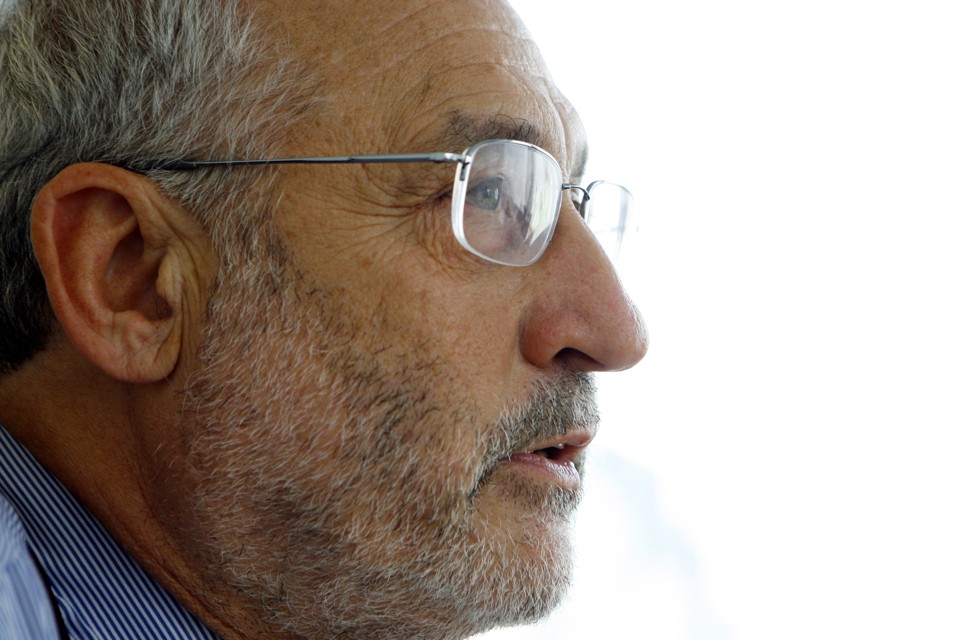
Mike Segar / Reuters
Gillian B. White Nov 2, 2015 Business
If there’s one thing Joseph Stiglitz wants to say about inequality, it’s that it has been a choice, not an unexpected, unfortunate economic outcome. That’s unnerving, but it also means that citizens and politicians have the opportunity to fix the problem before it gets worse.
In his new book, Rewriting the Rules of the American Economy: An Agenda for Growth and Shared Prosperity .. http://www.indiebound.org/search/book?searchfor=Rewriting+the+Rules+of+the+American+Economy%3A+ , Stiglitz, a Nobel-prize winning economist, professor at Columbia University, and the chief economist at the Roosevelt Institute, asks the question “Can the rules of America’s economy be rewritten to benefit everyone—not just the wealthy?” The answer, he insists, is yes.
Stiglitz describes the current situation as “a stark picture of a world gone wrong”: He notes that 91 percent of all income growth between 2009 and 2012 was enjoyed by the wealthiest 1 percent of Americans. In the first half of the book, Stiglitz focuses on the practices and policies that have gotten the country to this point. It is a familiar story: The demise of labor unions, the increasing financialization of the economy, and the lack of wealth-building opportunities in minority communities have made the rich richer while leaving everyone else to flounder. He lists off a bevy of other contributors too: weak wages, ineffective regulation and federal oversight, and a focus on short-term versus long-term growth, which embodies a preference for rewarding shareholders over workers and consumers.
Stiglitz also notes that despite advancements in technology, which should—in theory—increase efficiency and lower costs, consumers are paying more in fees for financial services, which enriches big banks and companies while siphoning money out of the middle class. All of these things, he says, have created a society with a gaping hole, not only in its economic makeup, but in its morality.
--
Latest from Business
The Anxiety at Davos
http://www.theatlantic.com/business/archive/2016/01/davos-anxiety-inequality-growth/424818/
--
Stiglitz spends the latter portion of the book laying out how to fix things. Like his primer on how inequality came to be, the solutions cover everything from fiscal policy to corporate boardrooms to retirement savings. His overview doesn’t prioritize pragmatism: A solution that only involves overhauling the few things that everyone agrees need to be overhauled is no solution at all, he argues.
Instead, he swings for the fences, suggesting a massive revision in the way the U.S. economy does business. First up is the attempt to tame what is called rent-seeking—the practice of increasing wealth by taking it from others rather than generating any actual economic activity. Lobbying, for example, allows large companies to spend money influencing laws and regulations in their favor, but lobbying itself isn’t helpful for the economy besides creating a small number of jobs in Washington; it produces nothing but helps an already rich and influential group grow more rich and more influential. Stiglitz suggests that reducing rent-seeking is critical to reining in inequality, especially when it comes to complex issues such as housing prices, patents, and the power that large corporations wield.
To overhaul these behaviors and the policies that support it, Stiglitz says that America should give up what he deems the “incorrect and outdated” belief in supply-side economics, which grows from the premise that regulation and taxes dampen business opportunities and economic growth. Instead, massive changes to tax laws, regulations, and the financial sector are needed, he says, in order to curb rent-seeking. For instance, increasing tax rates, ending preferential treatment for top earners, and refining the tax code would decrease incentives to amass extreme amounts of wealth, since it would be so heavily taxed, and that tax would be difficult to shirk. Stiglitz suggests a 5 percent increase to the tax rate of the top 1 percent of earners—a move that he says would raise as much as $1.5 trillion over 10 years. He also calls for a “fair tax,” which would eliminate preferential tax treatment for money earned from capital gains and dividends—perks enjoyed primarily by people who can afford to own a lot of stock.
To further ensure that corporations, markets, and individuals aren’t pursuing profits at the expense of workers and the public, Stiglitz calls for a more active central bank. He accuses the Fed of being both too narrowly focused on macroeconomic indicators, and too deferential to the businesses and markets it has the ability to regulate. He wants the government to sponsor a homeownership agency that would dole out housing loans in a way that encourages buyers instead of developers and would closely monitor the market for fairness.
Stiglitz’s thoroughness is admirable, but his prescriptions can be overwhelming, given how much it would take to make each change. The agenda also includes emphasizing the goal of full employment rather than focusing on the sometimes reductive unemployment figures; investment in public infrastructure; better access to financial services, childcare, health care, and paid leave; and strengthened opportunities for collective bargaining. Oh, and better wages for workers, and more corporate transparency, too.
Actually implementing all of these changes would require a complete shift in American policy and practice. The world that Stiglitz envisions in his book, one where all citizens can enjoy the promise of education, employment, housing, and a secure retirement seems at once like the realization of the American dream and an unattainable utopia.
_____________________
Related Video [YouTube of embed}
How much is the CEO of an enormous company really worth?
http://www.theatlantic.com/business/archive/2015/11/stiglitz-heres-how-to-fix-inequality/413761/
See also:
Don’t Blame the Internet for Rising Inequality
http://investorshub.advfn.com/boards/read_msg.aspx?message_id=109493464
[Feb 11, 2014] NEW STUDY: Corporate Welfare Makes the Rich Lazy
http://investorshub.advfn.com/boards/read_msg.aspx?message_id=98796261
The Disastrous Legacy Of Ronald Reagan In Charts
http://investorshub.advfn.com/boards/read_msg.aspx?message_id=104147086
Wealth, Income, and Power
http://investorshub.advfn.com/boards/read_msg.aspx?message_id=94929669
50 Billionaires Receive Unnecessary Farm Subsidies
http://investorshub.advfn.com/boards/read_msg.aspx?message_id=93952511
"Widening Income Inequality Bad For Economic Growth: IMF Report"
In his new book, a Nobel laureate outlines how the huge disparity arose and the huge course correction needed to address it.
Mike Segar / Reuters
Gillian B. White Nov 2, 2015 Business
If there’s one thing Joseph Stiglitz wants to say about inequality, it’s that it has been a choice, not an unexpected, unfortunate economic outcome. That’s unnerving, but it also means that citizens and politicians have the opportunity to fix the problem before it gets worse.
In his new book, Rewriting the Rules of the American Economy: An Agenda for Growth and Shared Prosperity .. http://www.indiebound.org/search/book?searchfor=Rewriting+the+Rules+of+the+American+Economy%3A+ , Stiglitz, a Nobel-prize winning economist, professor at Columbia University, and the chief economist at the Roosevelt Institute, asks the question “Can the rules of America’s economy be rewritten to benefit everyone—not just the wealthy?” The answer, he insists, is yes.
Stiglitz describes the current situation as “a stark picture of a world gone wrong”: He notes that 91 percent of all income growth between 2009 and 2012 was enjoyed by the wealthiest 1 percent of Americans. In the first half of the book, Stiglitz focuses on the practices and policies that have gotten the country to this point. It is a familiar story: The demise of labor unions, the increasing financialization of the economy, and the lack of wealth-building opportunities in minority communities have made the rich richer while leaving everyone else to flounder. He lists off a bevy of other contributors too: weak wages, ineffective regulation and federal oversight, and a focus on short-term versus long-term growth, which embodies a preference for rewarding shareholders over workers and consumers.
Stiglitz also notes that despite advancements in technology, which should—in theory—increase efficiency and lower costs, consumers are paying more in fees for financial services, which enriches big banks and companies while siphoning money out of the middle class. All of these things, he says, have created a society with a gaping hole, not only in its economic makeup, but in its morality.
--
Latest from Business
The Anxiety at Davos
http://www.theatlantic.com/business/archive/2016/01/davos-anxiety-inequality-growth/424818/
--
Stiglitz spends the latter portion of the book laying out how to fix things. Like his primer on how inequality came to be, the solutions cover everything from fiscal policy to corporate boardrooms to retirement savings. His overview doesn’t prioritize pragmatism: A solution that only involves overhauling the few things that everyone agrees need to be overhauled is no solution at all, he argues.
Instead, he swings for the fences, suggesting a massive revision in the way the U.S. economy does business. First up is the attempt to tame what is called rent-seeking—the practice of increasing wealth by taking it from others rather than generating any actual economic activity. Lobbying, for example, allows large companies to spend money influencing laws and regulations in their favor, but lobbying itself isn’t helpful for the economy besides creating a small number of jobs in Washington; it produces nothing but helps an already rich and influential group grow more rich and more influential. Stiglitz suggests that reducing rent-seeking is critical to reining in inequality, especially when it comes to complex issues such as housing prices, patents, and the power that large corporations wield.
To overhaul these behaviors and the policies that support it, Stiglitz says that America should give up what he deems the “incorrect and outdated” belief in supply-side economics, which grows from the premise that regulation and taxes dampen business opportunities and economic growth. Instead, massive changes to tax laws, regulations, and the financial sector are needed, he says, in order to curb rent-seeking. For instance, increasing tax rates, ending preferential treatment for top earners, and refining the tax code would decrease incentives to amass extreme amounts of wealth, since it would be so heavily taxed, and that tax would be difficult to shirk. Stiglitz suggests a 5 percent increase to the tax rate of the top 1 percent of earners—a move that he says would raise as much as $1.5 trillion over 10 years. He also calls for a “fair tax,” which would eliminate preferential tax treatment for money earned from capital gains and dividends—perks enjoyed primarily by people who can afford to own a lot of stock.
To further ensure that corporations, markets, and individuals aren’t pursuing profits at the expense of workers and the public, Stiglitz calls for a more active central bank. He accuses the Fed of being both too narrowly focused on macroeconomic indicators, and too deferential to the businesses and markets it has the ability to regulate. He wants the government to sponsor a homeownership agency that would dole out housing loans in a way that encourages buyers instead of developers and would closely monitor the market for fairness.
Stiglitz’s thoroughness is admirable, but his prescriptions can be overwhelming, given how much it would take to make each change. The agenda also includes emphasizing the goal of full employment rather than focusing on the sometimes reductive unemployment figures; investment in public infrastructure; better access to financial services, childcare, health care, and paid leave; and strengthened opportunities for collective bargaining. Oh, and better wages for workers, and more corporate transparency, too.
Actually implementing all of these changes would require a complete shift in American policy and practice. The world that Stiglitz envisions in his book, one where all citizens can enjoy the promise of education, employment, housing, and a secure retirement seems at once like the realization of the American dream and an unattainable utopia.
_____________________
Related Video [YouTube of embed}
How much is the CEO of an enormous company really worth?
http://www.theatlantic.com/business/archive/2015/11/stiglitz-heres-how-to-fix-inequality/413761/
See also:
Don’t Blame the Internet for Rising Inequality
http://investorshub.advfn.com/boards/read_msg.aspx?message_id=109493464
[Feb 11, 2014] NEW STUDY: Corporate Welfare Makes the Rich Lazy
http://investorshub.advfn.com/boards/read_msg.aspx?message_id=98796261
The Disastrous Legacy Of Ronald Reagan In Charts
http://investorshub.advfn.com/boards/read_msg.aspx?message_id=104147086
Wealth, Income, and Power
http://investorshub.advfn.com/boards/read_msg.aspx?message_id=94929669
50 Billionaires Receive Unnecessary Farm Subsidies
http://investorshub.advfn.com/boards/read_msg.aspx?message_id=93952511
It was Plato who said, “He, O men, is the wisest, who like Socrates, knows that his wisdom is in truth worth nothing”
Discover What Traders Are Watching
Explore small cap ideas before they hit the headlines.



