



 AI
AI







Monday, September 07, 2015 3:59:55 AM
Carly Fiorina’s Business Record: Not So Sterling

Carly Fiorina, in Iowa on Sunday seeking the Republican presidential nomination, doesn’t often bring up her business career.
AUG. 17, 2015
http://www.nytimes.com/2015/08/18/business/carly-fiorinas-record-not-so-sterling.html [with comments]
--
Carly Fiorina's Fuzzy Vaccine Claims Debunked
All of the CDC’s recommended immunizations, including those for HPV in preteen boys and girls, are highly effective at preventing communicable and dangerous diseases.
August 21, 2015
http://www.factcheck.org/2015/08/fiorinas-fuzzy-vaccine-claims/ [also at/title taken from http://www.huffingtonpost.com/entry/carly-fiorina-vaccines_55d72471e4b00d8137ede9a9 (with comments)]
--
The Intersection of Water, Energy and Climate
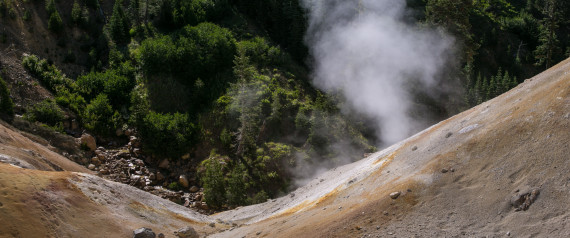
George Rose via Getty Images
By Adnan Z. Amin
IRENA Director-General
This week, global experts gather in Stockholm for World Water Week [ http://www.worldwaterweek.org/ ] amidst a backdrop of water-related crises worldwide. The U.S. state of California is experiencing a record-breaking four-year drought. Brazil and South Africa have electricity, water and food supply shortages due to low precipitation. Puerto Rico residents are also feeling the pinch, with rations limiting tap water access to just twice a week. This issue of water and climate change is central in this week's discussions, with the UN Climate Change Conference set to negotiate a global climate action agreement beginning in just three months.
While renewable energy is widely acknowledged as an important tool to mitigate climate change, its role in water conservation is not so recognized. Water is an essential ingredient in the energy production process. In the EU for example, energy production accounts for 44 percent [ http://www.eea.europa.eu/publications/water-resources-across-europe ] of total water use. Conversely, energy is also needed to process water for consumption. By 2050, the global population will demand roughly 80 percent [ http://www.irena.org/menu/index.aspx?mnu=Subcat&PriMenuID=36&CatID=141&SubcatID=496 ] more energy and 55 percent [id.] more water than today. Meeting these growing demands is a tremendous challenge, given competing needs for limited resources amid heightened climate change effects.
This is where renewable energy has a role to play in the water-energy-climate nexus. During power generation, solar power withdraws 200 times less [id.] water than a coal power plant to produce the same amount of electricity. Wind power requires no water. IRENA [ http://www.irena.org / http://www.irena.org/home/index.aspx ] analysis finds that doubling the share of renewable energy, in particular solar PV and wind, could reduce water withdrawals in the power sector [id.] as much as 52 percent in the UK, 37 percent in the US, 32 percent in Australia, 28 percent in Germany and 12 percent in India. The European Wind Energy Association found that wind energy in the EU avoided the use of 387 billion litres [ http://www.ewea.org/fileadmin/files/library/publications/reports/Saving_water_with_wind_energy.pdf ] of water in 2012 -- equivalent to the average annual water use of 3 million EU households -- and the American Wind Energy Association found that wind energy saved 257 billion litres [ http://www.awea.org/MediaCenter/pressrelease.aspx?ItemNumber=7444 ] of water nationwide in 2014, 13 billion alone in the drought-prone state of Texas.
Achieving the massive scale-up of renewable energy needed has never been more achievable than it is right now. Renewable energy has beat out fossil fuels as the cheapest source of power in many parts of the world. We also have the technology and the means to integrate variable renewable energy technologies into the electricity grid, creating jobs along the way. The business case for renewable energy as a water-saving mechanism is also strong. In a Carbon Disclosure Project survey [ https://www.cdp.net/CDPResults/CDP-Global-Water-Report-2014.pdf ] of Global 500 companies, 82 percent of energy companies and 73 percent of utilities found that water shortages were a substantial risk to business operations and 59 percent of energy companies and 67 percent of utilities had experienced water-related business impacts in the past five years.
Low-cost, low-carbon, water-saving renewable energy is increasingly seen as the key to ushering in a sustainable energy future on a global scale. In the U.S., President Obama recently revised his clean power plan, which places significant emphasis on wind and solar power along with other renewable energy sources, to displace coal-fired power plants and cut greenhouse gas emissions from U.S. power stations by nearly a third within 15 years. In Sweden, the government is proposing a 5 Terawatt-hour increase of the production of renewable energy by 2020 -- equivalent to the electricity consumption of one million Swedish homes. China is targeting a massive 200 Gigawatts (GW) of onshore wind power and 100 GW of solar PV by 2020. India has committed to 100 GW of solar PV and 40 GW of wind by 2022. Worldwide, 164 countries now have renewable energy targets, up from just 43 countries in 2005.
In our globalized world, everything is interconnected. Water, energy and climate can no longer be thought of as separate issues. The only effective, immediately available solution to meet the rising demand for water and energy, while also mitigating climate change, is to scale up renewable energy and phase out fossil fuels. This shift is happening, but not fast enough. It's now up to global policy makers, governments, investors and the private sector to build on the growing momentum and throw their weight behind the ongoing global energy system transformation for the benefit of our economy, our society and our environment.
Copyright ©2015 TheHuffingtonPost.com, Inc. (emphasis added)
http://www.huffingtonpost.com/adnan-z-amin/the-intersection-of-water_b_8031834.html [with comments]
--
The US Just Made Its Largest Investment In Renewable Energy Yet

In this Friday, Sept. 30, 2011 file photo, solar panel installation underway at the Mesquite Solar 1 facility under construction in Arlington, Ariz.
(AP Photo/Ross D. Franklin, File)
The solar farm is expected to be the largest in the world.
By Joseph Erbentraut
Posted: 09/01/2015 04:56 PM EDT | Edited: 09/01/2015 05:38 PM EDT
The U.S. government just made its largest renewable energy purchase to date.
The U.S. Navy has invested an undisclosed amount in the Mesquite solar farm [ http://www.navy.mil/submit/display.asp?story_id=90684 ] in sun-rich Arizona, allowing for an expansion of the facility that is anticipated to make it the world’s largest solar farm.
As the Climate News Network’s Paul Brown reports, the farm -- located about 40 miles west of Phoenix -- will provide 210 megawatts of direct power [ http://www.climatenewsnetwork.net/solar-power-takes-giant-strides-as-prices-fall/ ], a third of the energy needed to power 14 Navy and Marine Corps sites. The solar farm, slated to go online next year, is expected to save the Navy “at least” $90 million in energy costs over the course of the 25-year contract with Sempra U.S. Gas and Power, which operates it.
The Mesquite facility, which completed its first phase of buildout in late 2012, has a potential capacity of 700 megawatts, which would power up to 260,000 homes [ http://www.semprausgp.com/energy-solutions/solar-mesquite-solar.html ]. It requires no water to operate and reduces greenhouse gas emissions, according to Sempra.
The investment marks a big step toward the Department of Defense’s Congress-mandated goal to either produce or procure 25 percent of its total energy needs [ https://www.whitehouse.gov/the-press-office/2012/04/11/fact-sheet-obama-administration-announces-additional-steps-increase-ener ] from renewable sources by 2025, the Navy announcement noted.
Meanwhile, India has also set its sights on creating the world’s largest solar farm. The country announced last month that it will build a 750-megawatt plant [ http://www.ndtv.com/india-news/madhya-pradesh-to-host-worlds-largest-solar-power-station-1210075 ] on 1,500 acres of barren, government-owned land in the northeastern Madhya Pradesh state. The plant, however, is not expected to be in operation until 2017.
The increased interest in solar energy comes amid a new report from the Paris-based International Energy Agency showing that the cost of producing electricity from solar and other renewable sources has decreased "significantly" in recent years [ http://www.bloomberg.com/news/articles/2015-08-31/solar-wind-power-costs-drop-as-fossil-fuels-increase-iea-says ]; they are no longer "cost outliers" when compared to fossil fuels, Bloomberg reports.
Copyright © 2015 TheHuffingtonPost.com, Inc. (emphasis added)
http://www.huffingtonpost.com/entry/us-navy-solar-farm-arizona_55e5e235e4b0b7a9633a6406 [with comments]
--
(linked in) http://investorshub.advfn.com/boards/read_msg.aspx?message_id=116787440 and preceding (and any future following)

Carly Fiorina, in Iowa on Sunday seeking the Republican presidential nomination, doesn’t often bring up her business career.
AUG. 17, 2015
http://www.nytimes.com/2015/08/18/business/carly-fiorinas-record-not-so-sterling.html [with comments]
--
Carly Fiorina's Fuzzy Vaccine Claims Debunked
All of the CDC’s recommended immunizations, including those for HPV in preteen boys and girls, are highly effective at preventing communicable and dangerous diseases.
August 21, 2015
http://www.factcheck.org/2015/08/fiorinas-fuzzy-vaccine-claims/ [also at/title taken from http://www.huffingtonpost.com/entry/carly-fiorina-vaccines_55d72471e4b00d8137ede9a9 (with comments)]
--
The Intersection of Water, Energy and Climate
George Rose via Getty Images
By Adnan Z. Amin
IRENA Director-General
This week, global experts gather in Stockholm for World Water Week [ http://www.worldwaterweek.org/ ] amidst a backdrop of water-related crises worldwide. The U.S. state of California is experiencing a record-breaking four-year drought. Brazil and South Africa have electricity, water and food supply shortages due to low precipitation. Puerto Rico residents are also feeling the pinch, with rations limiting tap water access to just twice a week. This issue of water and climate change is central in this week's discussions, with the UN Climate Change Conference set to negotiate a global climate action agreement beginning in just three months.
While renewable energy is widely acknowledged as an important tool to mitigate climate change, its role in water conservation is not so recognized. Water is an essential ingredient in the energy production process. In the EU for example, energy production accounts for 44 percent [ http://www.eea.europa.eu/publications/water-resources-across-europe ] of total water use. Conversely, energy is also needed to process water for consumption. By 2050, the global population will demand roughly 80 percent [ http://www.irena.org/menu/index.aspx?mnu=Subcat&PriMenuID=36&CatID=141&SubcatID=496 ] more energy and 55 percent [id.] more water than today. Meeting these growing demands is a tremendous challenge, given competing needs for limited resources amid heightened climate change effects.
This is where renewable energy has a role to play in the water-energy-climate nexus. During power generation, solar power withdraws 200 times less [id.] water than a coal power plant to produce the same amount of electricity. Wind power requires no water. IRENA [ http://www.irena.org / http://www.irena.org/home/index.aspx ] analysis finds that doubling the share of renewable energy, in particular solar PV and wind, could reduce water withdrawals in the power sector [id.] as much as 52 percent in the UK, 37 percent in the US, 32 percent in Australia, 28 percent in Germany and 12 percent in India. The European Wind Energy Association found that wind energy in the EU avoided the use of 387 billion litres [ http://www.ewea.org/fileadmin/files/library/publications/reports/Saving_water_with_wind_energy.pdf ] of water in 2012 -- equivalent to the average annual water use of 3 million EU households -- and the American Wind Energy Association found that wind energy saved 257 billion litres [ http://www.awea.org/MediaCenter/pressrelease.aspx?ItemNumber=7444 ] of water nationwide in 2014, 13 billion alone in the drought-prone state of Texas.
Achieving the massive scale-up of renewable energy needed has never been more achievable than it is right now. Renewable energy has beat out fossil fuels as the cheapest source of power in many parts of the world. We also have the technology and the means to integrate variable renewable energy technologies into the electricity grid, creating jobs along the way. The business case for renewable energy as a water-saving mechanism is also strong. In a Carbon Disclosure Project survey [ https://www.cdp.net/CDPResults/CDP-Global-Water-Report-2014.pdf ] of Global 500 companies, 82 percent of energy companies and 73 percent of utilities found that water shortages were a substantial risk to business operations and 59 percent of energy companies and 67 percent of utilities had experienced water-related business impacts in the past five years.
Low-cost, low-carbon, water-saving renewable energy is increasingly seen as the key to ushering in a sustainable energy future on a global scale. In the U.S., President Obama recently revised his clean power plan, which places significant emphasis on wind and solar power along with other renewable energy sources, to displace coal-fired power plants and cut greenhouse gas emissions from U.S. power stations by nearly a third within 15 years. In Sweden, the government is proposing a 5 Terawatt-hour increase of the production of renewable energy by 2020 -- equivalent to the electricity consumption of one million Swedish homes. China is targeting a massive 200 Gigawatts (GW) of onshore wind power and 100 GW of solar PV by 2020. India has committed to 100 GW of solar PV and 40 GW of wind by 2022. Worldwide, 164 countries now have renewable energy targets, up from just 43 countries in 2005.
In our globalized world, everything is interconnected. Water, energy and climate can no longer be thought of as separate issues. The only effective, immediately available solution to meet the rising demand for water and energy, while also mitigating climate change, is to scale up renewable energy and phase out fossil fuels. This shift is happening, but not fast enough. It's now up to global policy makers, governments, investors and the private sector to build on the growing momentum and throw their weight behind the ongoing global energy system transformation for the benefit of our economy, our society and our environment.
Copyright ©2015 TheHuffingtonPost.com, Inc. (emphasis added)
http://www.huffingtonpost.com/adnan-z-amin/the-intersection-of-water_b_8031834.html [with comments]
--
The US Just Made Its Largest Investment In Renewable Energy Yet

In this Friday, Sept. 30, 2011 file photo, solar panel installation underway at the Mesquite Solar 1 facility under construction in Arlington, Ariz.
(AP Photo/Ross D. Franklin, File)
The solar farm is expected to be the largest in the world.
By Joseph Erbentraut
Posted: 09/01/2015 04:56 PM EDT | Edited: 09/01/2015 05:38 PM EDT
The U.S. government just made its largest renewable energy purchase to date.
The U.S. Navy has invested an undisclosed amount in the Mesquite solar farm [ http://www.navy.mil/submit/display.asp?story_id=90684 ] in sun-rich Arizona, allowing for an expansion of the facility that is anticipated to make it the world’s largest solar farm.
As the Climate News Network’s Paul Brown reports, the farm -- located about 40 miles west of Phoenix -- will provide 210 megawatts of direct power [ http://www.climatenewsnetwork.net/solar-power-takes-giant-strides-as-prices-fall/ ], a third of the energy needed to power 14 Navy and Marine Corps sites. The solar farm, slated to go online next year, is expected to save the Navy “at least” $90 million in energy costs over the course of the 25-year contract with Sempra U.S. Gas and Power, which operates it.
The Mesquite facility, which completed its first phase of buildout in late 2012, has a potential capacity of 700 megawatts, which would power up to 260,000 homes [ http://www.semprausgp.com/energy-solutions/solar-mesquite-solar.html ]. It requires no water to operate and reduces greenhouse gas emissions, according to Sempra.
The investment marks a big step toward the Department of Defense’s Congress-mandated goal to either produce or procure 25 percent of its total energy needs [ https://www.whitehouse.gov/the-press-office/2012/04/11/fact-sheet-obama-administration-announces-additional-steps-increase-ener ] from renewable sources by 2025, the Navy announcement noted.
Meanwhile, India has also set its sights on creating the world’s largest solar farm. The country announced last month that it will build a 750-megawatt plant [ http://www.ndtv.com/india-news/madhya-pradesh-to-host-worlds-largest-solar-power-station-1210075 ] on 1,500 acres of barren, government-owned land in the northeastern Madhya Pradesh state. The plant, however, is not expected to be in operation until 2017.
The increased interest in solar energy comes amid a new report from the Paris-based International Energy Agency showing that the cost of producing electricity from solar and other renewable sources has decreased "significantly" in recent years [ http://www.bloomberg.com/news/articles/2015-08-31/solar-wind-power-costs-drop-as-fossil-fuels-increase-iea-says ]; they are no longer "cost outliers" when compared to fossil fuels, Bloomberg reports.
Copyright © 2015 TheHuffingtonPost.com, Inc. (emphasis added)
http://www.huffingtonpost.com/entry/us-navy-solar-farm-arizona_55e5e235e4b0b7a9633a6406 [with comments]
--
(linked in) http://investorshub.advfn.com/boards/read_msg.aspx?message_id=116787440 and preceding (and any future following)

Greensburg, KS - 5/4/07
"Eternal vigilance is the price of Liberty."
from John Philpot Curran, Speech
upon the Right of Election, 1790
F6
Discover What Traders Are Watching
Explore small cap ideas before they hit the headlines.



