



 AI
AI








Friday, March 20, 2015 8:22:00 PM
Abbott joins Hollande and Kerry in using Daesh.
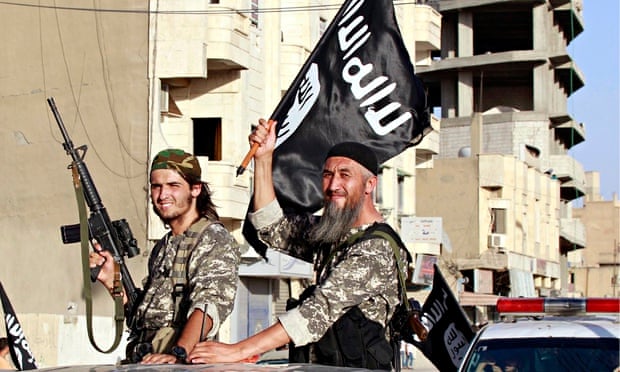
Islamic State fighters parade through Raqqa in Syria. Photograph: Reuters
[...]
In Arabic, the word lends itself to being snarled with aggression. As Simon Collis, the British ambassador to Iraq told the Guardian’s Ian Black: “Arabic speakers spit out the name Da’ish with different mixtures of contempt, ridicule and hostility. Da’ish is always negative.”
And if that wasn’t infuriating enough for the militants, Black reports that the acronym has already become an Arabic word in its own right, with a plural – daw’aish – meaning “bigots who impose their views on others”.
http://www.theguardian.com/world/2015/jan/12/tony-abbott-say-hell-now-use-daesh-instead-of-isil-for-death-cult-but-why
Ok, that was in January, i've been a bit slow to it, but now am happy to say it is something i can agree with Abbott on 100%. ISIL, ISIS and IS should be assigned
to a black hole by everyone. To the same black hole all of those vicious murderers should be condemned to. The recent mosque bombings in Yemen and Tunisia

Hani Mohammed/AP
With Attacks in Yemen and Tunisia ISIS Launches a Global War of Terror
Jamie Dettmer 03.20.15
The gruesome bombings in Sanaa and Tunis this week show ISIS expanding its theater of operations.
http://www.thedailybeast.com/articles/2015/03/20/with-attacks-in-yemen-and-tunisia-isis-launches-a-global-war-of-terror.html
are about as sick as any wanton war violence could be. All know by now that defeating these
terrorists will not be easy, and that Daesh leaders are not without support, and not incompetent.
1 September 2014 Last updated at 00:45 ET
Islamic State: Where does jihadist group get its support?

A militant islamist fighter takes part in an ISIS parade in Syria's eastern city of Raqqa June 30 2014 Islamic State outperformed all other militant rebel groups in Syria and continues to claim ground
[...]
In every activity - from fighting, to organisation and hierarchy, to media messaging - IS is light
years ahead of the assorted motley crew of opposition factions operating in the region.
'War economy'
Islamic State has put in place what appear to be the beginnings of quasi-state structures - ministries, law courts and even a rudimentary taxation system, which incidentally asks for far less than what was paid by citizens of Mr Assad's Syria.
IS has displayed a consistent pattern since it first began to take territory in early 2013.
Upon taking control of a town it quickly secures the water, flour and hydrocarbon resources of the area, centralising distribution and thereby making the local population dependent on it for survival.

Syrian President Bashar al-Assad is accused of doing business with Islamic State in Syria
Dependency and support are not the same thing, and it is impossible to quantify how many of Islamic State's "citizens" are willing partners in its project or simply acquiescing to its rule out of a need for stability or fear of punishment.
To understand how the Islamic State economy functions is to delve into a murky world of middlemen and shady business dealings, in which "loyal ideologues" on differing sides spot business opportunities and pounce upon them.
IS exports about 9,000 barrels of oil per day at prices ranging from about $25-$45 (£15-£27).
Some of this goes to Kurdish middlemen up towards Turkey, some goes for domestic IS consumption and some goes to the Assad regime, which in turn sells weapons back to the group.
"It is a traditional war economy," notes Jamestown analyst Wladimir van Wilgenburg.
Indeed, the dodgy dealings and strange alliances are beginning to look very similar to events that occurred during the Lebanese civil war, when feuding war lords would similarly fight and do business with each other.
The point is that Islamic State is essentially self-financing; it cannot be isolated and cut off from the world because it is intimately tied into regional stability in a way that benefits not only itself, but also the people it fights.
The larger question of course is whether such an integral pillar of the region (albeit shockingly violent and extreme) can be defeated.
Without Western military intervention it is unlikely. Although Sunni tribes in Iraq ponder their allegiances to the group, they do not have the firepower or finances necessary to topple IS and neither does the Iraqi army nor its Syrian counterpart.
Michael Stephens is Director of the Royal United Services Institute, Qatar, and is currently in Irbil
http://www.bbc.com/news/world-middle-east-29004253
It's Daesh for me, too, from now.
PS: Christianity learned (mostly) some time ago that fighting religious sectarian wars was not the best way to go.
The European wars of religion were a series of religious wars waged in Europe from ca. 1524
to 1648, following the onset of the Protestant Reformation in Western and Northern Europe.
http://en.wikipedia.org/wiki/European_wars_of_religion
When will these extremely vicious Daesh, all those Sunnis who sympathize with them,
and all those who fuel Islamic sectarianism learn that these wars must one day end, too.
Islamic State fighters parade through Raqqa in Syria. Photograph: Reuters
[...]
In Arabic, the word lends itself to being snarled with aggression. As Simon Collis, the British ambassador to Iraq told the Guardian’s Ian Black: “Arabic speakers spit out the name Da’ish with different mixtures of contempt, ridicule and hostility. Da’ish is always negative.”
And if that wasn’t infuriating enough for the militants, Black reports that the acronym has already become an Arabic word in its own right, with a plural – daw’aish – meaning “bigots who impose their views on others”.
http://www.theguardian.com/world/2015/jan/12/tony-abbott-say-hell-now-use-daesh-instead-of-isil-for-death-cult-but-why
Ok, that was in January, i've been a bit slow to it, but now am happy to say it is something i can agree with Abbott on 100%. ISIL, ISIS and IS should be assigned
to a black hole by everyone. To the same black hole all of those vicious murderers should be condemned to. The recent mosque bombings in Yemen and Tunisia

Hani Mohammed/AP
With Attacks in Yemen and Tunisia ISIS Launches a Global War of Terror
Jamie Dettmer 03.20.15
The gruesome bombings in Sanaa and Tunis this week show ISIS expanding its theater of operations.
http://www.thedailybeast.com/articles/2015/03/20/with-attacks-in-yemen-and-tunisia-isis-launches-a-global-war-of-terror.html
are about as sick as any wanton war violence could be. All know by now that defeating these
terrorists will not be easy, and that Daesh leaders are not without support, and not incompetent.
1 September 2014 Last updated at 00:45 ET
Islamic State: Where does jihadist group get its support?

A militant islamist fighter takes part in an ISIS parade in Syria's eastern city of Raqqa June 30 2014 Islamic State outperformed all other militant rebel groups in Syria and continues to claim ground
[...]
In every activity - from fighting, to organisation and hierarchy, to media messaging - IS is light
years ahead of the assorted motley crew of opposition factions operating in the region.
'War economy'
Islamic State has put in place what appear to be the beginnings of quasi-state structures - ministries, law courts and even a rudimentary taxation system, which incidentally asks for far less than what was paid by citizens of Mr Assad's Syria.
IS has displayed a consistent pattern since it first began to take territory in early 2013.
Upon taking control of a town it quickly secures the water, flour and hydrocarbon resources of the area, centralising distribution and thereby making the local population dependent on it for survival.

Syrian President Bashar al-Assad is accused of doing business with Islamic State in Syria
Dependency and support are not the same thing, and it is impossible to quantify how many of Islamic State's "citizens" are willing partners in its project or simply acquiescing to its rule out of a need for stability or fear of punishment.
To understand how the Islamic State economy functions is to delve into a murky world of middlemen and shady business dealings, in which "loyal ideologues" on differing sides spot business opportunities and pounce upon them.
IS exports about 9,000 barrels of oil per day at prices ranging from about $25-$45 (£15-£27).
Some of this goes to Kurdish middlemen up towards Turkey, some goes for domestic IS consumption and some goes to the Assad regime, which in turn sells weapons back to the group.
"It is a traditional war economy," notes Jamestown analyst Wladimir van Wilgenburg.
Indeed, the dodgy dealings and strange alliances are beginning to look very similar to events that occurred during the Lebanese civil war, when feuding war lords would similarly fight and do business with each other.
The point is that Islamic State is essentially self-financing; it cannot be isolated and cut off from the world because it is intimately tied into regional stability in a way that benefits not only itself, but also the people it fights.
The larger question of course is whether such an integral pillar of the region (albeit shockingly violent and extreme) can be defeated.
Without Western military intervention it is unlikely. Although Sunni tribes in Iraq ponder their allegiances to the group, they do not have the firepower or finances necessary to topple IS and neither does the Iraqi army nor its Syrian counterpart.
Michael Stephens is Director of the Royal United Services Institute, Qatar, and is currently in Irbil
http://www.bbc.com/news/world-middle-east-29004253
It's Daesh for me, too, from now.
PS: Christianity learned (mostly) some time ago that fighting religious sectarian wars was not the best way to go.
The European wars of religion were a series of religious wars waged in Europe from ca. 1524
to 1648, following the onset of the Protestant Reformation in Western and Northern Europe.
http://en.wikipedia.org/wiki/European_wars_of_religion
When will these extremely vicious Daesh, all those Sunnis who sympathize with them,
and all those who fuel Islamic sectarianism learn that these wars must one day end, too.
It was Plato who said, “He, O men, is the wisest, who like Socrates, knows that his wisdom is in truth worth nothing”
Discover What Traders Are Watching
Explore small cap ideas before they hit the headlines.



