
 News
News  Market Data
  Discover
Support: 888-992-3836
Copyright © 2023 InvestorsHub Inc.






Register for free to join our community of investors and share your ideas. You will also get access to streaming quotes, interactive charts, trades, portfolio, live options flow and more tools.
How much grit it must take to pump penny trash.
Yeah it's a penny scam 👍
Can someone bring me up to date about Cannabis Science? I see Robert Kane was the VP of Investor relations who is working for a Company called Phytiva (so says Linked-In: https://www.linkedin.com/in/bkane334/ ) However, On May 7, 2009, the Company common shares commenced trading under the new stock symbol OTC: CBIS.
The Company formed two operating subsidiaries Cannabis Science BV and Cannabis Science International Holding BV in The Netherlands on May 10th and May 6th , 2013, respectively, to pursue business opportunities in Europe and worldwide.
Here is the full write-up of the company's history up to 2019.
https://finpedia.co/bin/Cannabis%20Science/
May it's time for a Class Action Lawsuit. Or has the time run out?
I’ve emailed and received no replies. Always thought it was a scam from the beginning.
I did and I have received nothing. It's been 6 months.
I wonder why they won't give us updates on:
1. The T.V. show with celebrity judges (who are the judges?)
2. The lawsuit that supposedly was filed in San Joaquin County, California. The brief was written by an attorney who was disbarred, which means it couldn't have been filed.
3. How is the fund raising going on the lawsuit. So far, the GoFundMe campaign has raised $1,155 in 7 months. There's was never a target given for how much was needed, as in other GoFundMe efforts.
4. Why ENDO is trading at zero and has virtually no shares changing hands everyday. 14,000 shares a day at even .001 would be $14.00. I feel sorry for the people that invested when it was .03, and then bragged about how much money they made on paper. Sadly, it's probably all gone now.
5. What's the status of the University effort?
6. When will the "loyalty" shares that we had to pay $65 be sent out? It's been 6 months and nothing yet.
7.What's the status of the "Gala" that was first proposed as an end of 2022 celebration, then a beginning of year event, but now seems to have been mothballed. If you pay $1,000 you can be a VIP and have all the updates. Yeah, right.
8. Why does Raymond Dabney have no time to give us real updates, but takes the time to complain and call people names who complain and bring up the lack of financial information?
9. What does "you've already won" "Harvard award for killing cancers" "bring on the news" "we are getting much closer" "cheers and congrats" "So much growth is here now for us" even mean?
I have a significant amount of money invested in this, I would appreciate honest answers. If my investment is gone, then fine, please tell me so I can take the write off. It seems we're being milked for more money (any amount $20-1,000). but there is really nothing to show for it. What's also frustrating, Dabney complains about the negative comments on the website and responds to them, but then removes the comments so you don't know what he's talking about. Instead, if he had real information, that would quiet his detractors.
I'm not in the wrong locker room, I'm not a troll or virus, I'm not jealous. I'm not a hater, manipulator or destroyer. I just want some honest answers and real updates as to where we are. Or tell me my investment is gone, I'll take my write-off and walk away. Just be honest and stop invoking God -- that's a huge red flag..
Robert Kane says that they were hacked and that's why the website is down. He says they're working to bring it back up.
somebody needs to report him for a ponzi scheme.

The site they put up to get you to pay for the gift shares is also no gone from the web. Not only do you get scammed buying the stock in the first place. They scam you again with the pay to receive your gift shares
Is anyone paying the $65?
Step 1. Fill out form below, simple if you are a Shareholder.
Step 2. Attach and UPLOAD .PDF Share confirmation documentation.
Step 3. Pay $65.00 processing fee in Confirmation email.
Step 4. Email your Full Name and Contact info to confirm after payment.
Step 5. Confirm email receipt of ELECTRONIC Share Issuance.
*** These Steps are MANDATORY in order to Immediately issue ALL the CBIS Loyalty GIFT Shares to ALL our Shareholders.
*** If you choose NOT to participate it is NOT a Mandatory event for all Shareholders. You can receive nothing and still own your original shares just like everyone else. This first round of additional shares are a Gift from Mr. Dabney to all CBIS Loyal Shareholders. Simply do not fill out the form and do not make any payments if you do NOT want yours. Your Original shares will be called for Trading (at the same time as everyone else) once the audit is completed and the trading symbol is reinstated depending on the Exchange the Company will file trade on. There will be plenty of News Releases and updates on this website for you to consciously keep track of the Company progress and subsequent value and trading of your shares.
I am in the same boat. I saw on icannabinoid they were restructuring but haven’t heard a thing. Is this a bust if so how do I claim my losses, my shares seem to be held up. I called Ameritrade and they said they are holding the shares but cannot do anything with it.
How do you figure? Thanks!!!
I while back their was some kind of bs pr that they were in the process. It was in somewhere in 2020. I call bs too. I don't know why they keep trying to make anyone to believe in this company still. Probably trying not to get sued.
Who in their right mind would give their hard earned money to 2 scam artists with no news of revenue of any kind in 5 years of the once promising cannibis patent and hemp products. The hottest commodity on the planet
They got delisted for a reason and nothing has changed other than the CEO putting down people who contradict his odd way of communicating to share holders
CBCA a scam
CBIS was legit then turned into a scam after 2 of it's early leaders died and others left.
Endo a scam about Hemp products that never reported a dime in revenue
The list of failures is a mile long.Not one successs
Failures.
Cannibis beer
Cannibis pharmacy
Bottle company
Crypto currency...Yes 3 years ago they had news of creating their own crypto
Cannibis patent
Business in canada, Europe and Africa with no sales
Harvard medical
NFL PTSD
Military supplier of who knows what
Now they want u to call them and handover money for Paint startup
Maybe miracles do happen but not if these 2 clowns Dabney and Kane are involved. Total stealth silence on anything other than live negotiator 8th grade level website.
I hope it's a new company who is just taking over a broken shell and is only be restructured
Was promised a new CBIS woul be in place many months ago with nothing on plans...just Step by step talk for 20 months now.
They are saying ENDO it’s an OTC but I’m waiting for my shares to be converted because it looks like the same clowns that shorted cbis are already in that one too.
Best to let them buy and when our shares get integrated it will dilute the base and old investors will benefit.
I’m not putting anymore money until I see a return on my initial investment.
Well that’s actually true anybody holding the shares when it went private was informed through their brokerage house or mail that their shares are still in tact.
I still hold shares in my E*TRADE account and it will soon be converted to the new company.
Good luck to all that are waiting
CBIS shares are cancelled, that means they don't exist, no matter how deluded former shareholders may be.
Hope that helps.
So if I have several shares of cbis on Ameritrade, do I just wait until they convert over to the new symbol or is there something I need to do?
Heres my prediction.
The name and symbol change to thermic is the only way the can officially hide both fake companies CBIS and ENDO. Neither of these had SEC financial posted which is a requirement for numerous years. They will hide the 2 failed shells as 2 private entities under the new symbol with neither ever producing a dime.
Now they will pump Thermic symbol and may already be swindling share holders into believing something good is gonna happen with the cancer patent with the first rights offer in this new company thermic science. CBIS and ENDO and CBCA never had any sales revenue if any kind posted. Just FAKE news at its best.
Now they have a new symbol to work with after 18+ months claiming it's worth $100 a share.
Now listen up here.
If CBIS in fact converts it's old worthless shares over to new symbol and gives the share holder loyalty gift they have been pushing for 5 years plus.
The new symbol will have, drum roll please, FIVE BILLION plus shares out if the gate for a new conglomerate with zero sales.
They are predicting great things with thermic an unheard of company forecasting like it's the new Bitcoin crate.
Note the forecasted CBIS showing Fake numbers too around 6 years ago on cancer cure patent with it to be a 10 billion company too.
and never produced 1 penny.
If you are lucky and your cbis shares do begin trading under new thermic symbol sell at least 50% oout of the gate to capture something
To be worth $100 a share on Nasdaq like the Dabney loser just posted to excite sheeple they would be ...sit down first.... A $400,000,000,000 or 400 billion dollar company.
Do u get the picture now
We would be worth half if Apple.
Note how he's been throwing in words Amazon, Berkshire Hathaway etc. To get u dreaming so u give them more of your money.
Maybe Thermic has something but if they truly did do u really believe they would join with these 2 proven scam artists over 12 years Kane and Dabney...
Call the SEC to understand this new symbol before z ever lose another dime.
This post will be deleted by Dabney just like my prior one so hopefully u get a chance to c the truth one last time
The so called tux wearing ceo said they merge into ENDO shares and the CBIS shares are to be 1.5x what u had of CBIS..
Note ENDO shares have went from .003 to .039 in just a few weeks or a 1000% gain based on some suspicious recent news released by CBIS.
CBIS had around 3 billion shares plus when SEC shut them down for filing no Income statements for many years
So if CBIS merges to ENDO that means approx 5 billion shares of ENDO and neither company has ever posted any income or earnings statements for years.
So if the merge took place today with endo at .04 that gives a market cap of 200,000,000 dollars for companies with ZERO posted earnings and ZERO products
Unless this is a top secret under the radar cancer curing medicinal marijuana patent being sold already by overseas, I would sell 75% of the shares u have at relisting and pray for a miracle the remaining 25% may increase in value.
I expect a good runup in price due to a planned release of great things to come news by the scam CEO Danny. Then expect a 99% drop in price quickly after relisting fake news dies off.
what will happen with shares we have ?
They are being bought by another company and that company will be going otc by next year...
Raymond C. Dabney, Cannabis Science President
https://www.cannabisscience.com/raymond-c-dabney
https://icannabinoid.com/index.php/25730raymond-c-dabney/profile
Also see lacannabischamber.com - Nov 24, 2019
https://lacannabischamber.com/cannabis-science-corrupt-cbis-stock-the-crooks-and-the-lawyer-politician/
Cannabis Science, Inc. (OTC: CBIS)
Under SEC Sanctions the Company Goes Private as It Enters Into Step (2) of Its Growth Transition, Enabling Full Transparency and Revenue Growth ...
Once the private corporation status takes effect the Company’s President will begin the steps to file a Dutch auction IPO targeting $25,000,000 USD or more with all current shareholders intact with completed financials, first rights IPO offerings for current shareholders, new shareholder IPO offerings, and a new company trading symbol. All Cannabis Science shareholders of record as of the last day trading whether individuals or entities will be eligible for the first rights IPO offering and shareholder loyalty gifts; all other new shareholders will be officially closed-out once the transition to private company status has occurred.
https://www.globenewswire.com/news-release/2019/10/21/1932520/0/en/Cannabis-Science-Issues-2019-Guidance-Report-Under-SEC-Sanctions-the-Company-Goes-Private-as-It-Enters-Into-Step-2-of-Its-Growth-Transition-Enabling-Full-Transparency-and-Revenue-G.html
See SEC Litigation/Suspensions Info
https://secsearch.sec.gov/search?utf8=?&affiliate=secsearch&query=BLKG
$BLKG
$CBIS
In the Matter of
Black Stallion Oil & Gas, Inc.
n/k/a Arize Therapeutics, Inc. and
Cannabis Science, Inc. (CBIS)
The company is delisted, not suspended. The company was suspended, and then administratively placed on the Grey Market post suspension.
The company remained on that market and then was administratively dissolved and delisted by the SEC because of delinquent SEC filings. There is no coming back from "fka" (formerly known as) because those shares stand cancelled.
Here is the suspension order, and the delistment order, with all of the pertinent SEC regs included.
https://investorshub.advfn.com/boards/read_msg.aspx?message_id=150939862
If you truly are interested in the actual status of this company, ask Renee on the board from the link above.
Hope this helps, because there is zero reason to hope for any further developments from this company/stock.
Have a nice day =)
You should probably look into the SEC regulations more, this company is currently suspended. There is a possibility it can relist if they find an MM to put them back on the market which is extremely rare. So never say never especially when you don’t know.
You should probably look into the SEC regulations more, this company is currently suspended. There is a possibility it can relist if they find an MM to put them back on the market which is extremely rare. So never say never especially when you don’t know.
Yes!!!
NEVER
It is "fka" (formerly known as) therefore is is gone forever. Now if the same people want to start a new company, then anyone can buy their shares, but this company and ticker is closed down forever and ever, all men!
This is not a difficult concept for.... most?
Do you know when it will be traded again... no news
Do you know when it will be traded again... no news
No, not ever it's over. fka=formerly known as.
The company is gone, investor money is long gone, sorry =/
https://investorshub.advfn.com/boards/getboards.aspx?searchstr=Fka
!cbis relisting
I called my broker who knows this guys in California hes a dirbag scam artist nothing more.
Dead stock
No this is a classic pump and dump.
The ceo is a 1st class liar and hell will be his reward for theft!!
He screwed over tons of people with lies and false hope.
I would hate to be him on judgement day
Total scam
Sad
Do any of these Grays ever relist?
$cbis https://www.icannabinoid.com/
Latest update 3 days ago

|
Followers
|
1186
|
Posters
|
|
|
Posts (Today)
|
0
|
Posts (Total)
|
129051
|
|
Created
|
10/06/06
|
Type
|
Free
|
| Moderators | |||


| |

====================================================
2019...SEVERELY DELINQUENT FILINGS
https://www.otcmarkets.com/stock/CBIS/disclosure
2014 Financial Highlights (from 10-K)
Net Loss $ 16,884,764 (2013: $ 5,934,301)
Accumulated Deficit $ 109,393,306 (2013: $ 92,508,542)
Revenue (educational and consulting) $ 1,031
http://www.otcmarkets.com/edgar/GetFilingHtml?FilingID=10637231
2015 (9 months) Highlights:
Revenue $4,150,
Gen&Admin $8,710,982
Net Loss $14,204,900 !!
https://www.facebook.com/CBISinc/
Sept 2016
The accompanying consolidated financial statements have been prepared in conformity with generally accepted accounting principles, which contemplate the continuation of the Company as a going concern. The Company reported an accumulated deficit of $139,971,991and had a stockholders’ deficit of $4,344,643 as of September 30, 2016.
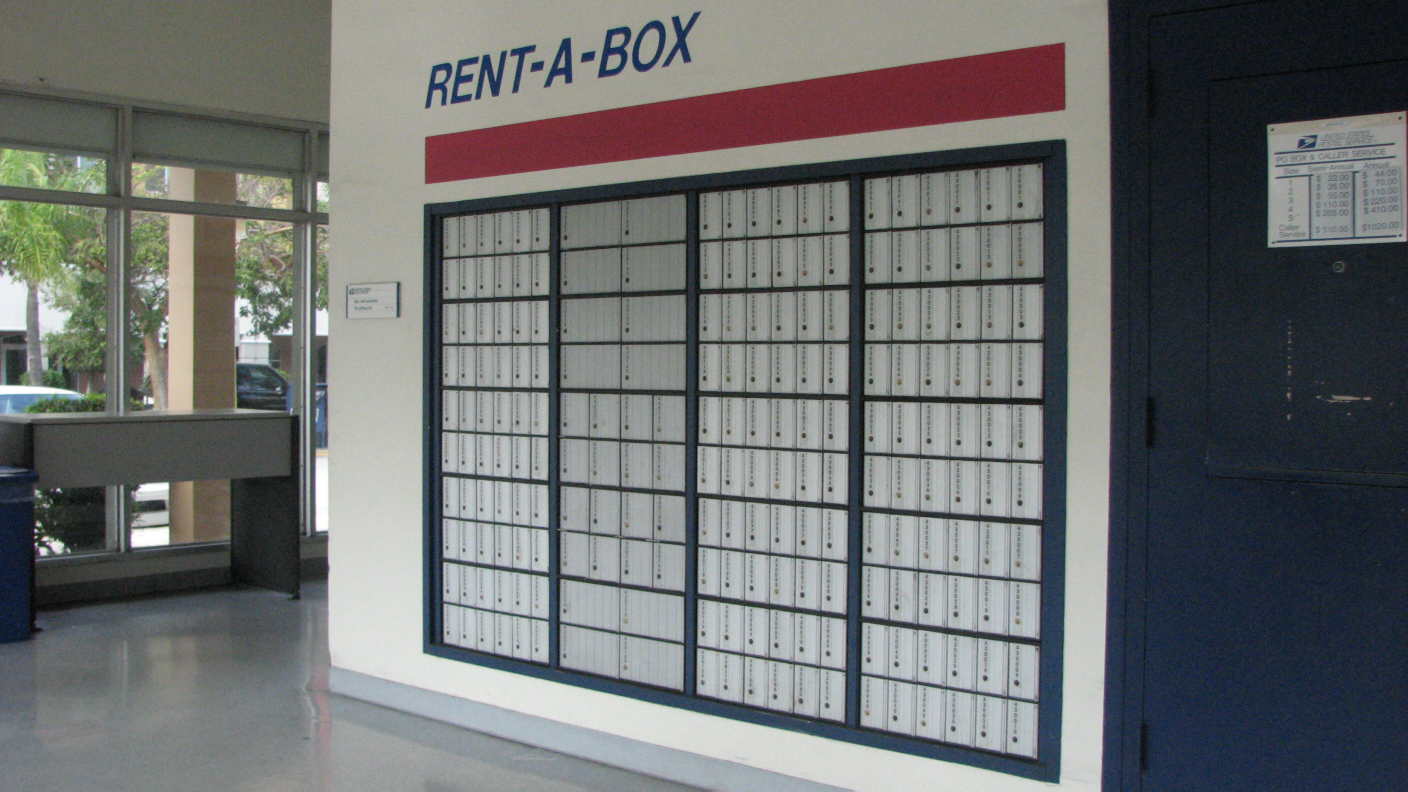
Is this CBIS International Headquarters, Research Center??
| Volume | |
| Day Range: | |
| Bid Price | |
| Ask Price | |
| Last Trade Time: |


