Market Data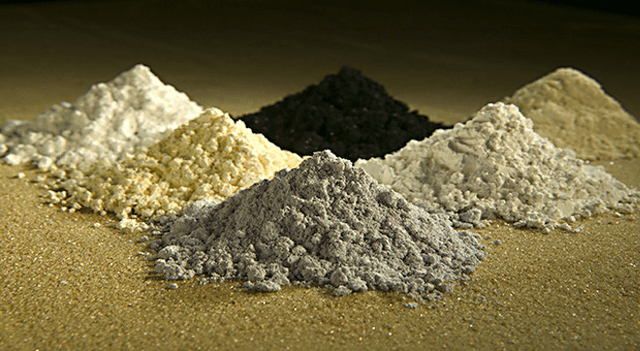
Worldwide inventories of yttrium — a key metal derived from rare earth minerals — are rapidly shrinking following China’s export restrictions, intensifying concerns that supply deficits and steep price spikes could soon impact the aerospace, energy, and semiconductor industries.
China, which dominates global production of this element used in high-performance alloys for engines and in protective coatings designed to withstand extreme heat, enacted export limits in April on yttrium and six other rare earth materials. The move was widely viewed as a countermeasure to U.S. tariff actions.
The meeting last month between U.S. President Donald Trump and China’s Xi Jinping briefly lifted hopes that a steadier flow of critical minerals might resume, but the underlying tensions remain unresolved.
While Beijing has eased certain restrictions on other rare earth exports, the April rules on yttrium remain fully in force. This continues to cast doubt over U.S. industry access to the material in the absence of a broader, long-term trade agreement between Washington and Beijing.
These controls require Chinese exporters to apply for government licenses, creating significant bottlenecks for shipments, according to four rare earth sector participants and Argus analyst Ellie Saklatvla.
Saklatvla noted that the licenses approved so far have only allowed small quantities to be shipped, and delays in securing delivery remain extensive.
“China’s export controls have undoubtedly sparked a rush for yttrium,” Saklatvla said.
Argus data shows European prices for yttrium oxide — used in high-temperature thermal coatings — have skyrocketed 4,400% since January, reaching $270 per kilogram. In contrast, Chinese domestic prices, at roughly $7 per kilogram, have risen only 16% this year and have recently begun to ease.
The U.S. Aerospace Industries Association (AIA) emphasized yttrium’s importance for next-generation jet engines and said it is working with policymakers in Washington to broaden domestic sourcing efforts.
“Currently, our supply chain is heavily dependent on imports from China – a dependence that has fueled rising costs in the face of growing shortages,” said Dak Hardwick, the AIA’s vice president for international affairs.
Semiconductor producers are also feeling the pinch. Two industry insiders told reporters that yttrium — used as both an insulator and a protective coating in chipmaking — has become increasingly hard to secure, with one source describing the severity as “9 out of 10.”
Beyond its role in aircraft engines and microchips, yttrium-based thermal coatings are widely used in gas-fired power plants, where they protect turbine blades operating in extreme temperatures.
If you’d like, I can also provide translations or produce a shorter or more technical version.
This content is for informational purposes only and does not constitute financial, investment, or other professional advice. It should not be considered a recommendation to buy or sell any securities or financial instruments. All investments involve risk, including the potential loss of principal. Past performance is not indicative of future results. You should conduct your own research and consult with a qualified financial advisor before making any investment decisions.
Some portions of this content may have been generated or assisted by artificial intelligence (AI) tools and been reviewed for accuracy and quality by our editorial team.

Apple (NASDAQ:AAPL) said on Friday that two prominent members of its executive team will be stepping down, marking another notable shift within the company’s upper ranks. Lisa Jackson — a former head of the U.S. Environmental Protection Agency who has spearheaded Apple’s sustainability and environmental policy efforts — will retire in January. During her tenure, […]





It looks like you are not logged in. Click the button below to log in and keep track of your recent history.


 Register for Free to get streaming real-time quotes, interactive charts, live options flow, and more.